
Clinical trials, with their complex legal and ethical regulations, impose stringent requirements concerning appropriate research methodology, which is focused on examining the most representative aspects of the given clinical problem. While such trials are concentrated on proving safety and efficacy of the tested substance or procedure for the majority of patients, it is may miss out on complications that are inherently associated with a specific minority of individuals. Understanding this aspect is crucial for the researchers themselves, as well as other professionals, most prominently ethicists, who are working on establishing legal and regulatory framework for clinical trials.
Inclusivity
The adjective “inclusive” refers to something that includes or encompasses a broad spectrum (or even all) of given objects. By definition, something that is inclusive should be intended for everyone; there are no criteria for defining access to it because it is universal. Thus, “inclusive” is the opposite of “exclusive,” meaning something intended for a select, limited group [1, 2].
How to understand and implement inclusivity in clinical trials
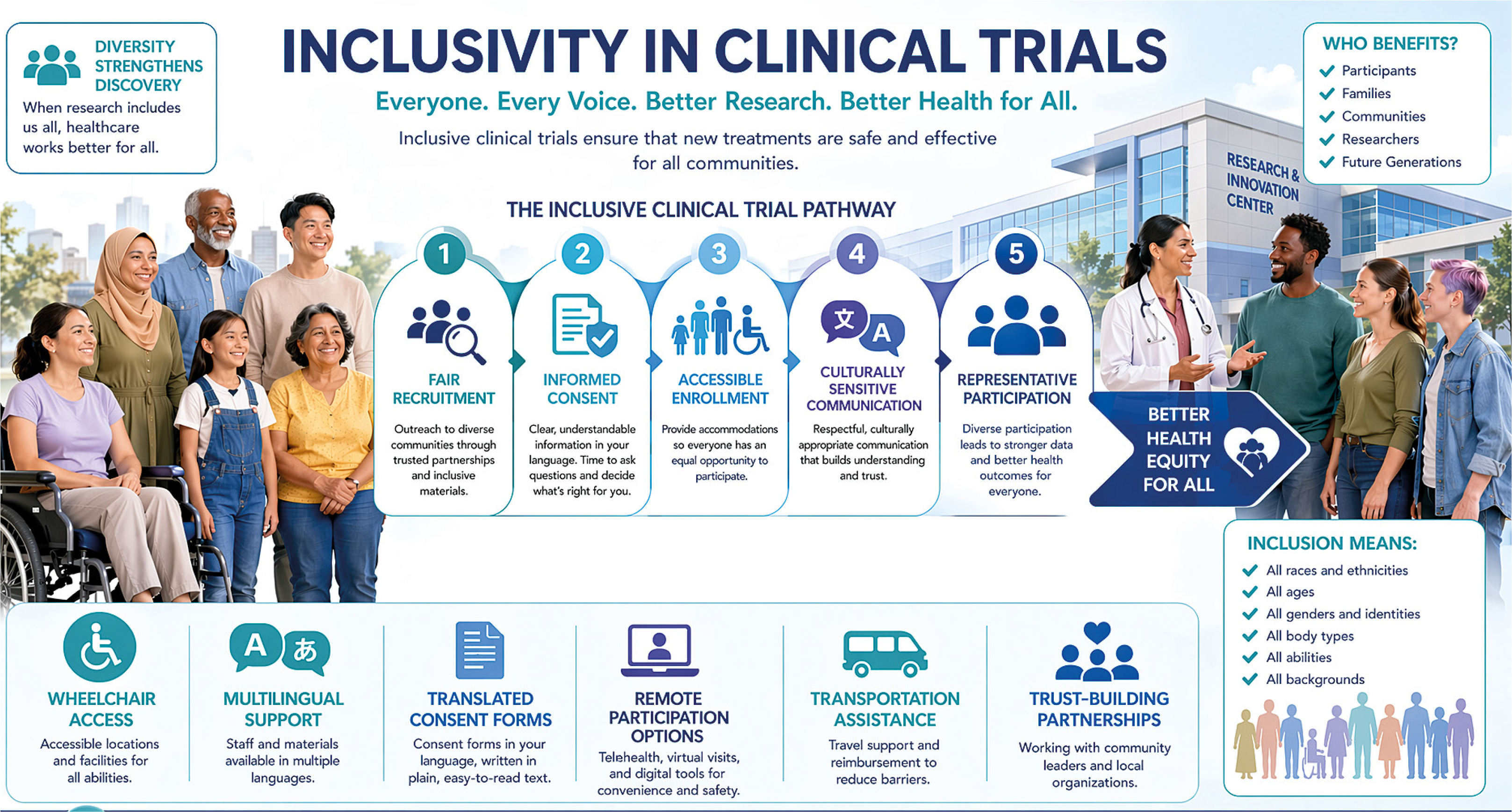
In clinical trials, inclusivity means recruiting diverse patient groups – taking into account gender, age, race, and ethnicity. This approach aims to ensure reliable results and assess the tested molecule for the entire population, taking into account geoepidemiological differences. Currently, emphasis is placed on ensuring that study groups reflect the actual demographics of patients with a given disease. Participants in clinical trials often do not reflect the populations for which healthcare interventions are needed or will be used. Enhancing the representation of under-represented groups in clinical research is important to ensure that research findings are widely applicable.
Is it always possible to provide fully representative study groups? While obtaining a “perfect” study group is close to impossible, it is still important to prepare for various variables related to the prevalence of a given disease in specific regions of the world, its different course, and genetic predispositions to specific autoimmune phenomena/diseases. Factors such as frequency of infections, the profile of pathogens and of environmental pollution in the investigated area or other external exposomes affecting a given population, may also prove significant.
Factors limiting inclusivity
Age may pose a certain limitation; older patients may have difficulty overcoming barriers such as distance from the center and difficulty understanding the specifics and procedures of a clinical trial. As for the youngest pediatric population, only a fraction of molecules or drugs already approved for adults are tested in children. Children are a unique group, and clinical trials in children raise particular ethical and clinical concerns. The International Clinical Trials Registry Platform (ICTRP) provides information on the preparation and conduct of trials in children, and the ICTRP portal identifies clinical trials involving children using a set of filters developed specifically for this purpose [3].
Factors limiting inclusivity can be divided into two sets – one from patient perspective second from investigator perspective (Table I).
Table I
Factors limiting inclusivity
In 2017, at the initiative of the UK National Institute for Health Research (NIHR), the INCLUDE study defined and identified underserved groups in clinical trials and pointed in particular to: older adults, ethnic minorities, people with socioeconomic disadvantage, the LGBTQ+ community, rural residents, people with comorbidities, including disabilities, as well as pregnant and breastfeeding women, and people with mental health conditions or cognitive impairments [4]. These latter two groups seem to merit separate treatment due to their specific circumstances regarding safety and understanding the stages and purpose of a clinical trial. The INCLUDE study also identified barriers to recruitment, including recruitment through tertiary care centers or in urban settings remote from rural populations, a lack of taxi transportation for people with limited mobility, and a lack of translated study information for those who do not speak the language of the study. Sponsor pressure for rapid recruitment may facilitate entry into the study for easier patients accustomed to clinical trials, but this does not maintain a more representative recruitment [5]. Based on the experience of the INCLUDE study, the SENSITISE project initiative was created, which should be concluded this year [5].
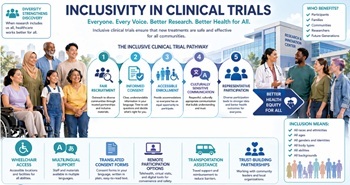
Figure 1 shows concept of inclusivity in clinical trials.
Research in the field of rheumatic diseases
Over the past 20 years rheumatology has become a dynamically developing specialty, thanks to advances in immunology, the implementation of genetic engineering techniques, and the development of innovative drugs, both biological and synthetic. Today’s pursuit of early detection, rapid treatment, and inhibition of the inflammatory and autoimmune processes is entirely justified and, in principle, feasible. Development of diagnostic and therapeutic options have translated also into a very dynamic development of clinical trials in rheumatology. Another driving force for clinical research in rheumatology has been, and continues to be, the discoveries of biosimilars to “old” reference drugs and the numerous comparative studies initiated.
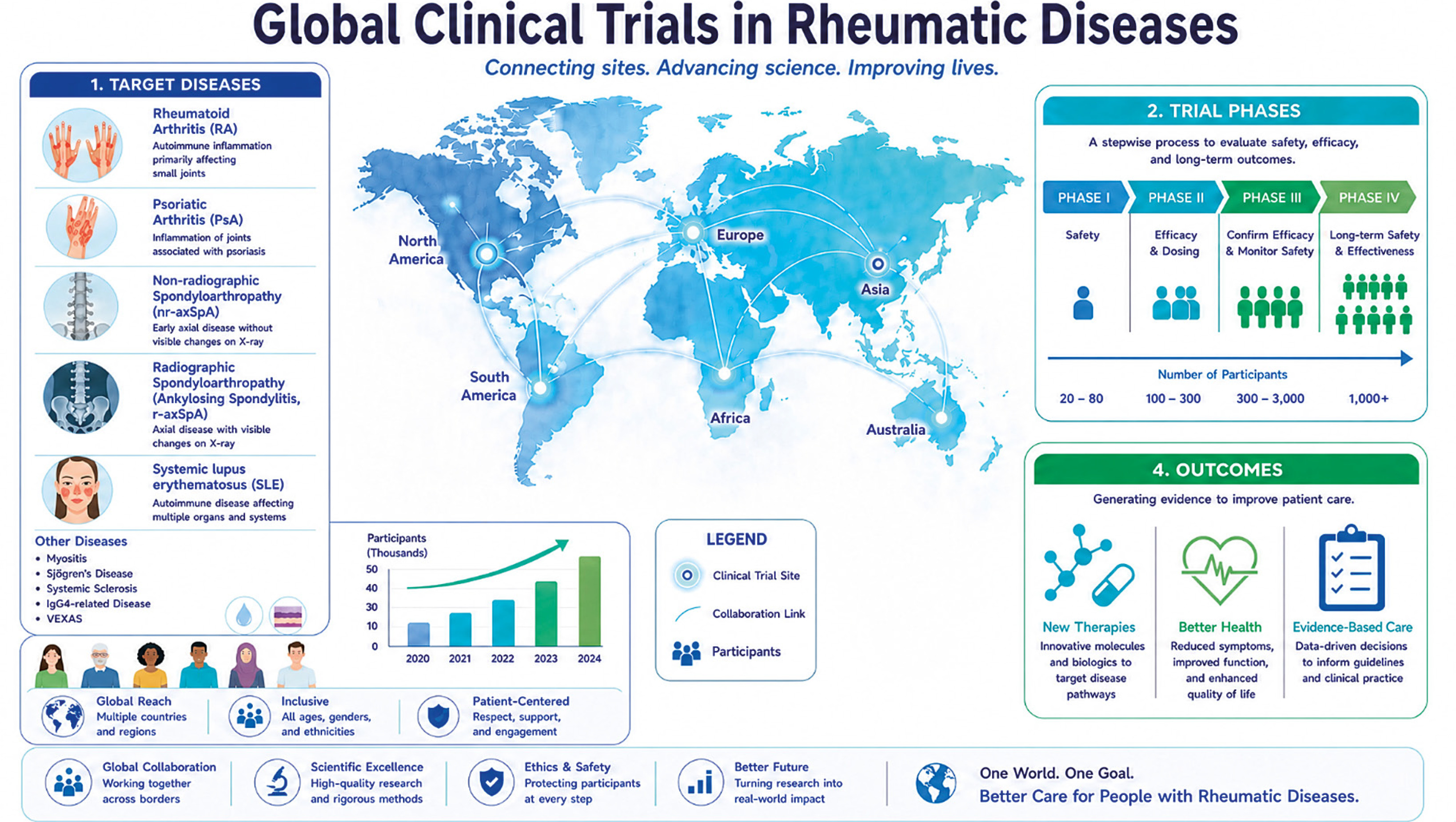
Figure 2 shows a look at global clinical trials in rheumatology.
The strength of clinical research in rheumatology lies in the introduction of increasingly effective innovative treatments for chronic and often life-threatening diseases.
Opportunities: research also improves or indicates a better model of patient care and familiarizes researchers.
Weaknesses: the costs of developing references for innovative drugs are still high, as are the costs of some procedures used for the research (e.g., BMT or CAR-T therapies).
Concerns: delays, particularly in the product approval and market launch phase.
According to estimates by Precedence Research the global rheumatology drug market is steadily growing and is projected to increase from USD 53.29 billion to approximately USD 68.49 billion by 2035, and to grow at a compound annual growth rate (CAGR) of 2.83% between 2026 and 2035 [6]. This dynamic growth is driven by the rising prevalence of autoimmune diseases, the increased use of biologics, and the incorporation of advanced research technologies, including artificial intelligence, for personalized treatment. This steady increase also demonstrates the power of clinical trials and the need for them in rheumatic diseases. Therefore, knowledge about a proper conduct clinical trials and about their inclusiveness is essential for rheumatologists and other researchers (Fig. 2).
Summary
Improving participation in clinical trials for groups that are typically underrepresented, optimal geographic distribution of trials, and a diverse age and gender sample are all key elements of achieving research inclusivity. Trial results cannot reliably support treatment decisions (or treatment regimens) for individuals not represented in the trial.
Clinical trial design is complex, and conducting trials requires careful attention and knowledge of the principles involved, and each investigator requires appropriate training to perform their duties.