Introduction
Inflammatory diseases such as rheumatoid arthritis (RA), inflammatory bowel disease (IBD), and systemic lupus erythematosus impose a substantial global health burden and cause debilitating physical and psychosocial symptoms for patients [1, 2]. Modern medicine has positioned the identification and application of biomarkers at the forefront of understanding these conditions’ complex pathophysiology [3]. Biomarkers serve as measurable indicators of disease presence, progression, and treatment response, offering important advantages for improved diagnostic accuracy, treatment monitoring, and prognostic assessment. Recent advances in omics technologies and analytical platforms have further enhanced their utility in personalized medicine and early disease detection [4]. Recent scientific advances have illuminated novel approaches, particularly tryptophan depletion (Kyn:Trp ratio) as an emerging indicator of immune dysregulation and interleukin-6 (IL-6) as a sensitive early marker of inflammatory activity [5–7]. These advances will illuminate the dynamic relationship between disease mechanisms and biomarker discovery, establishing a foundation for personalized treatments, precision medicine, and medical interventions through artificial intelligence (AI) and machine learning using big data.
Over the past 30 years, the research field of inflammatory diseases and biomarkers has evolved significantly, beginning with the establishment of basic biomarkers such as C-reactive protein (CRP) and erythrocyte sedimentation rate [3]. This was followed by the accelerated discovery of molecular biomarkers, including cytokines (e.g., IL-6, tumor necrosis factor [TNF]) [3] and metabolites (e.g., kynurenine) [8], and the adoption of systems biology approaches using network and pathway analysis. In recent years, AI and machine learning have enabled the identification of novel biomarkers and the development of predictive models for disease [9, 10]. However, coronavirus disease 2019 (COVID-19), which developed into a global pandemic just a few months after the first cases were reported in Wuhan, China in December 2019 [11], has dramatically changed the situation. The COVID-19 pandemic has brought unprecedented challenges and new opportunities to the inflammatory diseases and biomarker fields. The pandemic has not only changed disease patterns and patient management approaches, but also redirected scientific focus toward systemic inflammation, immune dysregulation, and novel biomarker identification strategies such as IL-6, CRP, and D-dimer as key indicators, identified using AI and machine learning techniques [12–14]. This situation calls for a comprehensive review of how the trajectory of inflammatory disease research has evolved, including the emergence of new research clusters such as long COVID, immunosenescence, and genetic susceptibility factors.
Study purpose and scope
This investigation analyzed 77,575 PubMed-indexed articles addressing “inflammatory disease and biomarker” published between 1995 and 2024. Through key word co-occurrence matrix analysis, this study aimed to:
identify the most frequent and interconnected research key words across the dataset;
track temporal trends and thematic evolution with particular attention to COVID-19 pandemic influences;
reveal novel thematic relationships and identify underexplored research connections.
The analysis drew from bibliographic data extracted from PubMed, encompassing article titles, abstracts, and key words. Dataset filtering included publications from 1995 to 2024, ensuring comprehensive temporal coverage spanning nearly 3 decades of scientific literature.
Significance and contribution
This study delivers a systematic, data-driven mapping of the intellectual landscape characterizing inflammatory disease and biomarker research. By integrating bibliometric analysis with an expanded interpretive framework, this research contributes:
novel perspectives on how major global health events reshape scientific priorities and research directions;
identification of underexplored connections among research domains, potentially informing future investigative pathways;
a reproducible methodological framework applicable to other biomedical fields for tracking research evolution and detecting emerging trends.
This study addresses existing literature gaps by quantifying established research patterns while simultaneously highlighting promising avenues for interdisciplinary collaboration and translational application in biomarker-driven medicine. The findings provide a foundation for understanding how external events influence scientific discourse and may guide strategic research planning in inflammatory disease biomarker development and use.
Material and methods
Data collection
A bibliographic dataset of publications related to “inflammatory disease and biomarker” was obtained from PubMed on August 4, 2025. The topic search retrieved 83,567 records. The dataset was refined by limiting the publication year range to 1995–2024, resulting in 77,575 records eligible for analysis. Each record contained the article title, abstract, and key words.
This temporal range was chosen to capture 3 decades of research development, covering the emergence of molecular biomarker science, the rapid expansion of high-throughput methods, and the research shifts triggered by the COVID-19 pandemic.
Data preprocessing
The analysis targeted textual elements from the title, abstract, and key words. Preprocessing removed stop words, extraneous punctuation, and non-informative terms. Frequency analysis identified the top 50 most frequent research key words within the corpus (see: Supplementary Appendix).
Matrix construction
A key word co-occurrence matrix was constructed to quantify the frequency with which pairs of key words appeared together in the same publication. The approach followed established bibliometric and text-mining frameworks for term co-occurrence analysis [15–17]. The co-occurrence counts were normalized using cosine similarity to mitigate the bias of highly frequent terms [15]. This method allowed the detection of meaningful associations between research topics across the dataset. The matrix served as the foundation for subsequent trend detection and thematic clustering, drawing on concepts from topic modeling and semantic indexing [18, 19].
The analysis divided the 30-year period into 3 distinct subperiods to trace thematic evolution:
1995–2004 (early phase of biomarker integration into inflammatory disease research);
2005–2014 (expansion of molecular and translational biomarker studies);
2015–2024 (integration of high-throughput methods, emergence of COVID-19-related research).
For each subperiod, the dominant themes and central research topics were identified, enabling a comparative assessment of thematic shifts over time.
Visualization
The co-occurrence matrix was transformed into a heatmap to visualize the strength of associations between key words [20]. Python (Version 3.10.5) provided the computational environment, with development conducted in PyCharm (Version 2022.1.3). The heatmap employed a color gradient to represent co-occurrence intensity, highlighting clusters of closely related terms. This visual approach facilitated the identification of research clusters, emergent topics, and underexplored connections.
Extended analytical perspectives
Beyond basic frequency and co-occurrence measures, the analysis sought to uncover previously underexplored relationships between emerging research domains. By mapping the developmental trajectory of research themes and situating them within broader biomedical and public health contexts, the results offer interpretive insights into future research opportunities and policy implications. This interpretive step ensures originality by linking computational findings to the evolving intellectual structure of “inflammatory disease and biomarker” research, with particular attention to the disruptions and accelerations brought about by the COVID-19 pandemic.
Results
Key word co-occurrence analysis, 1995–2004
A co-occurrence analysis of the top 50 key words from 1995 to 2004 revealed a predominance of cell biology and molecular biology terms. Strong associations were observed between cells and inflammation (12,933 occurrences), patients and disease (14,034 occurrences), and cells and expression (10,745 occurrences). Immune-related markers such as TNF and IL frequently appeared in combination, indicating a strong emphasis on research into cytokine signaling and immune responses during this early period (Fig. 1).
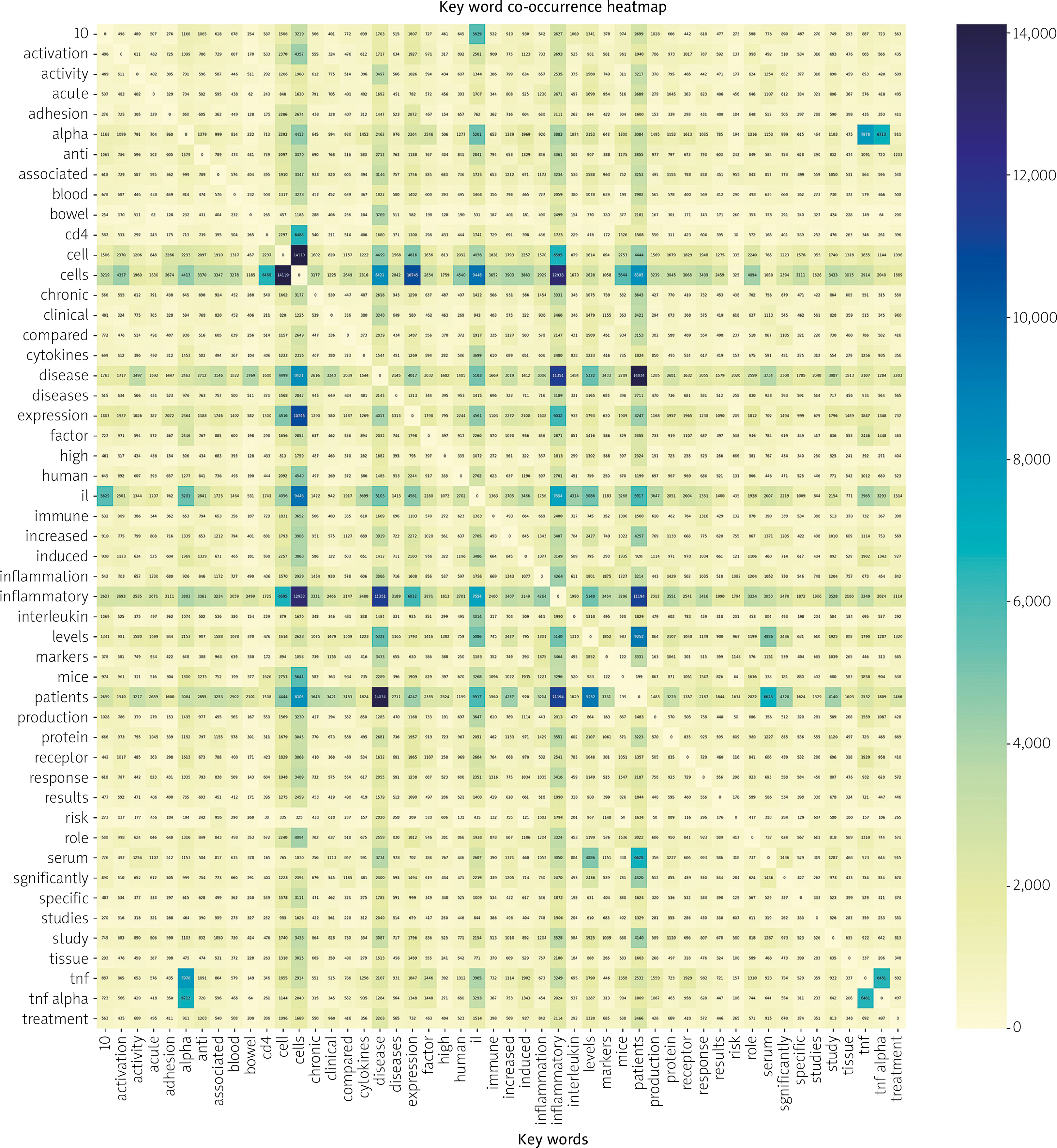
Co-occurrences such as bowel and disease (3,769 occurrences) highlighted the role of IBD as an important disease context for biomarker research. The heatmap for this period shows dense clusters around immune-related terms (IL, TNF, cells), reflecting the predominance of immunology-driven biomarker research in inflammatory diseases (Fig. 1).
Key word co-occurrence analysis, 2005–2014
From 2005 to 2014, the number of articles and the diversity of co-occurring terms significantly increased compared to 1995–2004. Strong associations were observed between disease and inflammatory (39,479 articles), inflammatory and patients (34,198 articles), and cell and cells (30,459 articles). The number of co-occurrences related to diseases and patients increased. In combination with diseases, the co-occurrence of clinical (12,161 ocurrences), risk (11,648 occurrences), and biomarkers (10,992 occurrences) appeared in the Top 50 (Fig. 2).
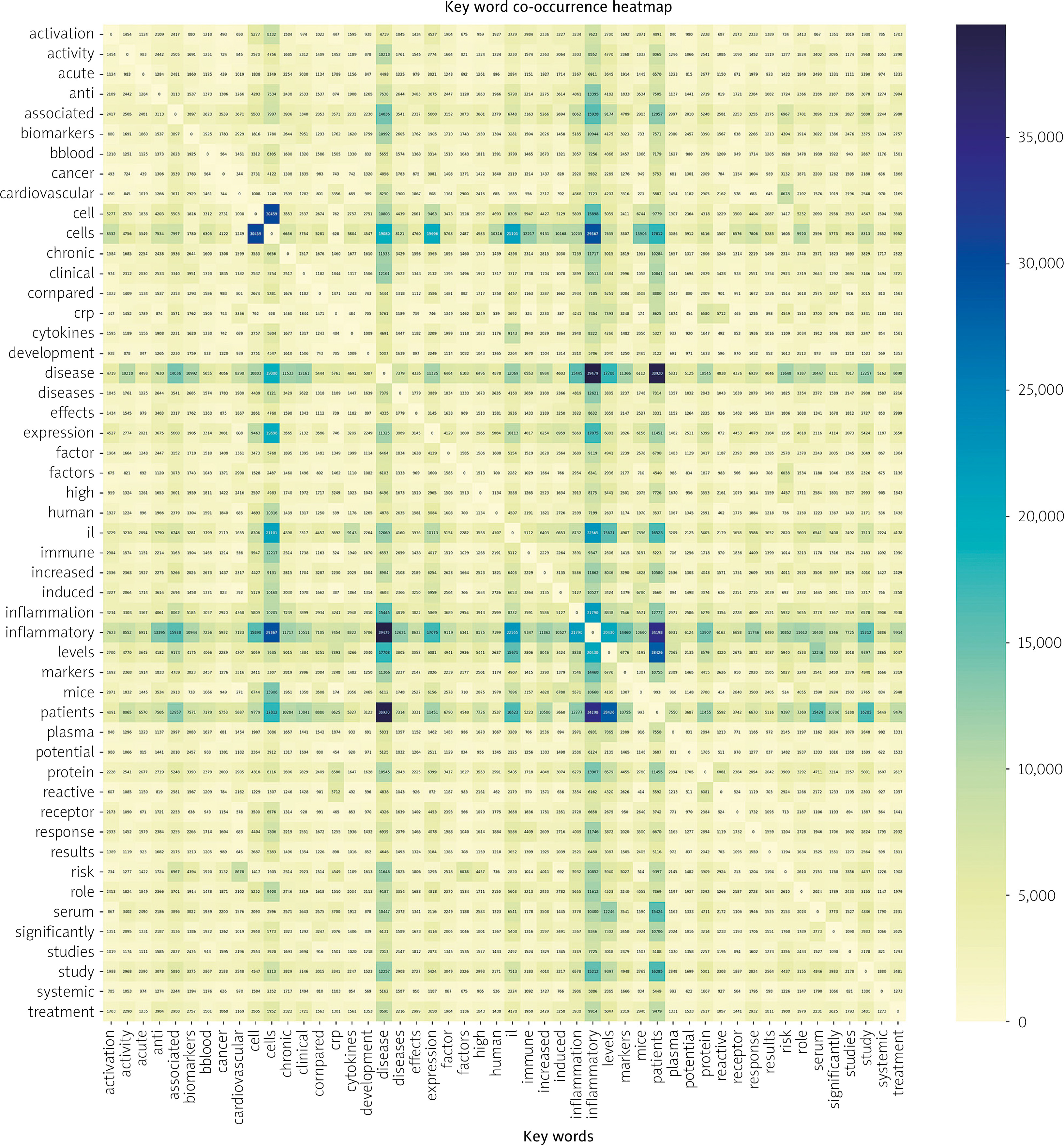
The results of the co-occurrence analysis indicated an evolution toward translational research, integrating both cell biology and molecular biology (expression, immunity, proteins) and clinical medicine (research, chronic diseases). The heat map for this period indicates that the medical field actively sought biomarkers applicable to diagnosis and treatment.
Key word co-occurrence analysis, 2015–2024
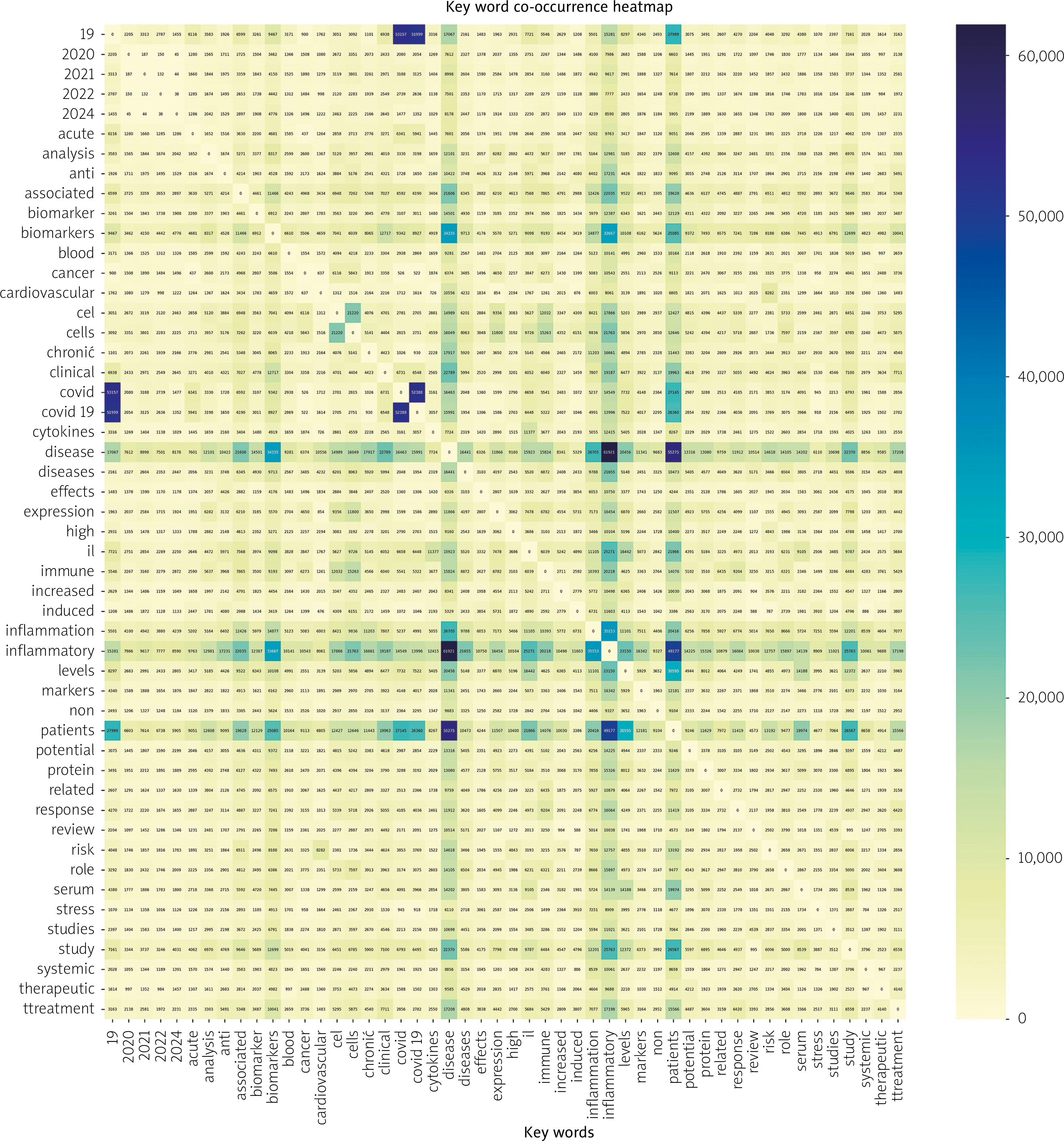
From 2015 to 2024, this field showed both continuity and change. Traditional combinations such as disease and inflammatory (103,419 occurrences) and inflammatory and patients (82,813 occurrences) remained dominant. However, the most notable change was the emergence of COVID-19 as a major research topic. This reflects the fact that COVID-19, as a disease related to inflammation and immune responses, has become the subject of biomarker research and study. The key words “covid 19,” “patients,” and “biomarkers” formed a new high-frequency cluster, with “covid 19” itself co-occurring 53,157 times (Fig. 3).
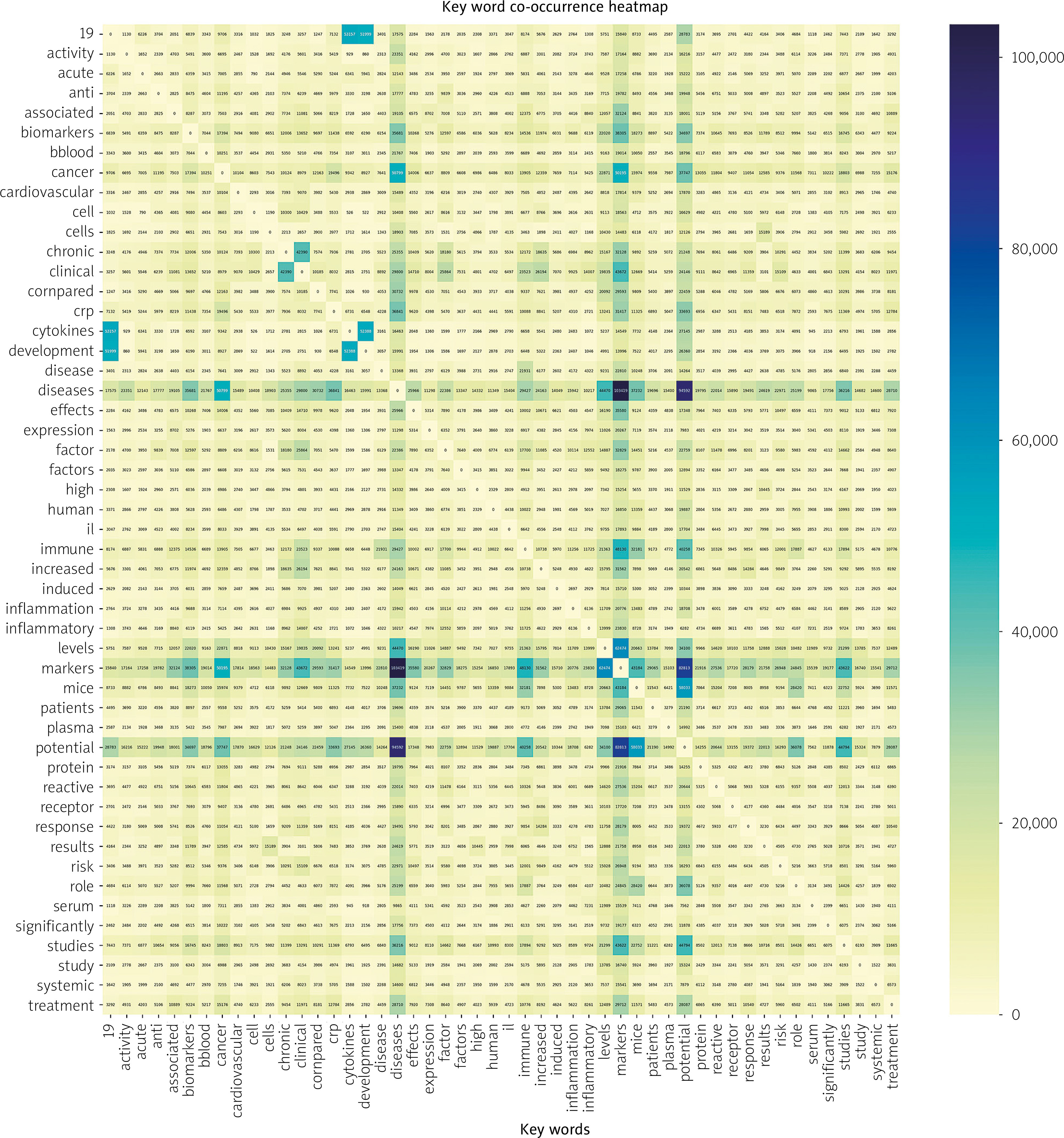
Another trend revealed was the rise of clinical research and study. As a result, key words such as “treatment” (28,710 co-occurrences with diseases), “clinical” (36,841 co-occurrences with diseases), and “chronic” and “disease” (30,732 co-occurrences) have become prominent (Fig. 3). This suggests an increased emphasis on treatment strategies and long-term disease management in inflammatory diseases. The heat map for this period clearly highlights COVID-19-related clusters as a major emerging area of research, dramatically changing the landscape of inflammatory disease biomarker research.
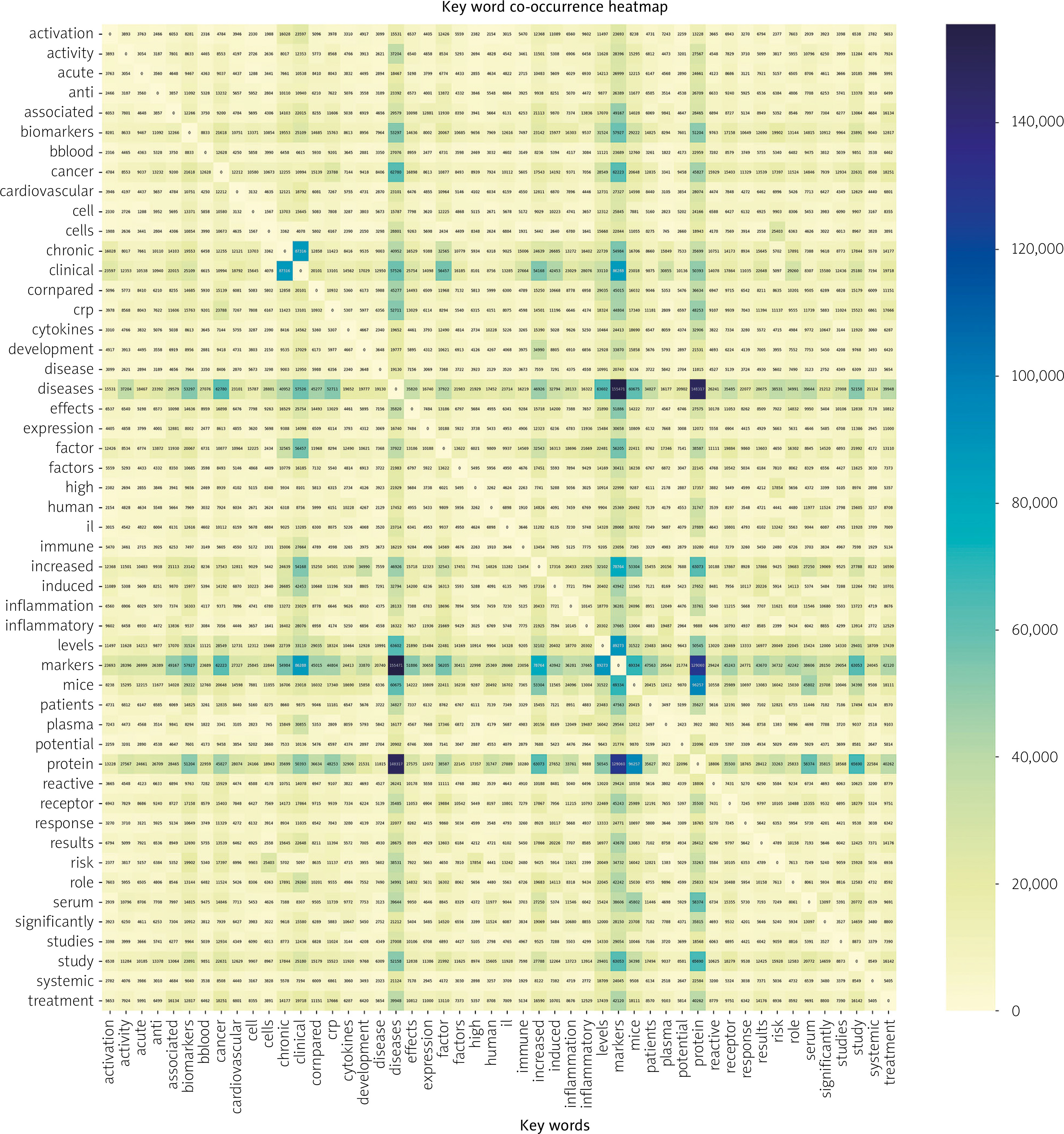
To further evaluate the impact of COVID-19, this study conducted a comparative analysis of the pre-COVID period (1995–2019) and the COVID-19/post-COVID period (2020–2024). The results revealed that, while the pre-COVID period primarily focused on key words related to elucidating the pathogenesis of inflammatory diseases and biomarker discovery (cell, IL, serum, biomarkers, chronic disease) (Fig. 4), the frequency of key words related to COVID-19 inflammation research and biomarker discovery (covid 19, patients, disease, inflammatory, immune, response) significantly increased during the COVID-19/post-COVID periods (Fig. 5). This suggests that the focus of research shifted from the pre-COVID period to the COVID-19/post-COVID period toward COVID-19 related inflammatory responses.
Summary of trends
To provide an overview of the chronological development of biomarker research in inflammatory diseases, Figure 6 summarizes major trends over 3 time periods (1995–2004, 2005–2014, and 2015–2024). The key words that consistently increased throughout these 3 periods were “disease – inflammatory,” “disease – patients,” “inflammatory – patients,” and “inflammatory – il.” These key word pairs demonstrate the increasing attention being paid to elucidating the pathogenesis of inflammatory diseases and biomarker research over time.
Fig. 6
Timeline of key word co-occurrence patterns in inflammatory diseases and biomarkers, 1995–2024.
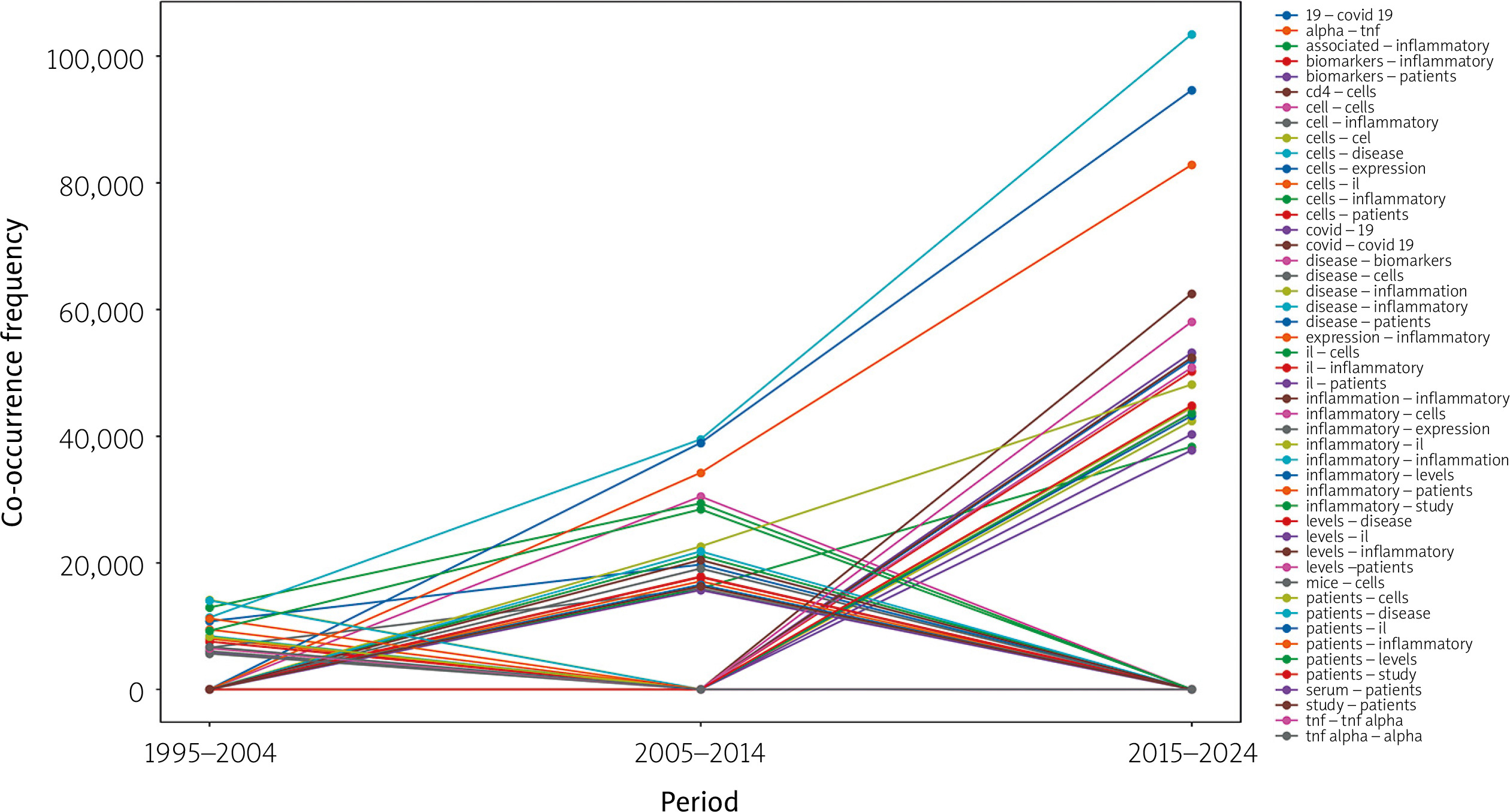
Research on inflammatory diseases and biomarkers from 1995 to 2024 began with basic research focusing on immune mechanisms and intracellular signaling. It gradually expanded to clinical research exploring the relationship between patient pathology and chronic inflammation, and the possibilities for diagnosis and treatment using biomarkers began to be explored. Since 2005, research on disease risk assessment and patient prognosis has progressed, and applications in actual medical settings have become a focus of attention. However, since 2015, the global spread of COVID-19 has significantly changed the direction of research. As the relationship between infectious diseases and inflammation has attracted attention, the importance of biomarkers has been reaffirmed, and their applications have expanded to understanding the progression of disease, evaluating the effectiveness of treatment, and even to the field of public health. It has become clear that research on inflammatory diseases has developed in stages from the molecular level to the clinical level and then to the health management of society. COVID-19 has accelerated this trend, making biomarker research indispensable in both medical care and public health.
This shift highlights the profound impact the COVID-19 pandemic has had on the trajectory of biomarker re-search in inflammatory diseases, including RA. The COVID-19 pandemic has prompted a new phase of research, bridged the realms of chronic inflammation and infectious diseases, and highlighted the need for integrated biomarker strategies that address both acute immune responses and long-term disease management.
Discussion
In this study, 77,575 PubMed-indexed articles on “inflammatory diseases and biomarkers” published between 1995 and 2024 were examined, and key word co-occurrence analysis was used to trace the evolution of this research topic. The analysis revealed 3 distinct developmental stages: the early period (1995 to 2004), when cell biology and molecular biology dominated; the middle period (2005 to 2014), characterized by the integration of molecular biology research with clinical applications; and the most recent period (since 2015), when the COVID-19 pandemic transformed inflammatory disease biomarker research into a key area of global public health importance.
Evolution of research priorities (1995–2024)
The field’s transformation from immunology-centered biomarker discovery to clinically focused and ultimately pandemic-driven research represents a fundamental paradigm shift. The 1995–2004 period emphasized cytokine signaling (IL, TNF) and immune responses, reflecting the era’s molecular-level focus. Research matured between 2005 and 2014 into translational medicine, prioritizing biomarkers for diagnosis, prognosis, and therapeutic monitoring in chronic inflammatory diseases. This period was a transition from basic science research to translational research, and knowledge in cell biology, molecular biology, and immunology was increasingly applied to clinical practice. Research results and discoveries made in the laboratory were being incorporated into diagnosis, and treatments reflected an increase in clinical applications. The recent decade (2015–2024) witnessed COVID-19 as an unexpected force that restructured the field’s thematic landscape. Specifically, co-occurring terms such as “covid 19,” “patients,” and “biomarkers” formed a new high-frequency cluster. Biomarker research expanded from clinical settings into population health domains, prioritizing infection-driven inflammation, disease surveillance, and treatment monitoring. This progression demonstrates how global health emergencies accelerate scientific priorities and redirect established research trajectories. Furthermore, a comparative analysis of the pre-COVID-19 and COVID-19/post-COVID-19 periods highlighted a shift in research topics, with an increase in research on COVID-19-related inflammation and immune responses.
Clinical translation and impact during the COVID-19 pandemic
An important point revealed in this study is the direct clinical impact of the discovery and application of biomarkers during the COVID-19 pandemic. Specifically, biomarkers, which clearly indicate changes in the body, played a major role in diagnosis and treatment.
For example, IL-6 increases when inflammation in the body is severe, and IL-6 levels were found to be very high in patients with severe COVID-19. Consequently, biomarkers have been used not only to predict the severity of COVID-19, but tocilizumab, which suppresses IL-6 activity, has also been used to alleviate COVID-19 symptoms. Furthermore, D-dimer, a substance that increases with blood clot formation, has emerged as a significant concern in COVID-19 patients due to increased blood clotting, making it important for determining treatment strategies. These examples demonstrate that biomarkers are not simply indicators of the body’s condition, but also markers that can guide treatment decisions. The COVID-19 pandemic has highlighted the importance of rapidly integrating these biomarkers into clinical practice. It is expected that this experience will be of great help in future infectious disease prevention efforts.
This progress demonstrates the clinical and translational potential of biomarker research and emphasizes the need for future studies to explore not only biomarker discovery but also pathways for their rapid implementation into clinical protocols.
Transition from micro level to macro level investigation
A notable trend over the past 30 years has seen the field expand from micro-level molecular and immunological studies to macro-level interdisciplinary approaches. Initially grounded in cell and molecular biology, it has evolved to incorporate clinical applications and, more recently, public health, epidemiology, big data, and artificial intelligence. This evolution reflects both the maturation of medical science and the need to integrate diverse disciplines when addressing complex health challenges in large populations, as catalyzed by COVID-19. Future collaborations with environmental, social, behavioral, and data science fields will likely be essential to further enrich biomarker research. Such interdisciplinary efforts and cooperation will be particularly important in investigating long COVID, immunosenescence, and their impact on aging, health disparities, and the equitable allocation of healthcare resources. These developments highlight the evolution of biomarker research into a single platform that informs health education, public health interventions, and resource planning, thereby exerting a significant policy and societal impact.
Research on inflammatory diseases and biomarkers has expanded from a microscopic perspective, examining the functions of cells and the immune system, to a macroscopic perspective that combines data science (big data, machine learning, large-scale analysis) with epidemiology, public health, and health policy. This shift in research demonstrates that biomarkers are not simply medical tools but are also becoming important as a means to protect the health of society.
Justification for temporal segmentation
The division into 3 decades (1995–2004, 2005–2014, 2015–2024) reflects both bibliometric growth patterns and major research focus inflection points. The first decade established immune biomarker discovery foundations, the second represented translational expansion into clinical contexts, and the third corresponds to COVID-19’s global disruption. This segmentation captures chronological progression while corresponding to natural scientific priority evolution. Importantly, this framework reveals a novel perspective: biomarkers function not merely as medical tools but as societal instruments for large-scale health monitoring, providing an intellectual foundation that extends to policymaking and healthcare system design. Traditional reviews often overlook this dimension, highlighting the present study’s originality.
Novel results and global perspectives
Combining co-occurrence analysis, which shows how frequently specific words appear with other words, with contextual interpretation, which understands word meanings and word usage based on background knowledge, may uncover previously hidden meanings in both inflammatory disease and biomarker research. First, using biomarkers as epidemiological indicators will broaden research beyond the confines of laboratories and hospitals. Second, it will highlight regional differences in biomarker use. Specifically, precision medicine approaches in developed countries are in contrast with public health-driven biomarker use in resource-limited countries. Third, future research applications will require consideration of how biomarkers themselves can be used as preventive strategies for chronic inflammatory diseases, infectious diseases, and other conditions, as well as monitoring indicators in larger populations. These new approaches require comparative research based not only on medical evidence but also on health policy and health policy outcome analyses. Finally, looking forward, advances in precision medicine and personalized medicine are expected to enable more accurate diagnosis and treatment, create a society in which everyone has equal access to medical care, and help prepare for future pandemics, including the spread of infection.
Study limitations
This study has several limitations that should be acknowledged. Because only data from the PubMed database were analyzed, there is a possibility of selection bias, especially since publications published in regional journals and non-English journals are not indexed. Future studies should consider incorporating a broader range of databases to mitigate this limitation. Furthermore, key word-based co-occurrence analysis may not comprehensively cover all research content and may oversimplify the content of the paper topics. Finally, although the division of the 30-year period is consistent with the thematic evolution of the field, it is debatable whether these 10-year intervals represent the optimal temporal divisions. In addition, bibliometric analysis is inherently a quantitative approach, and it does not allow for a qualitative evaluation of the scientific content, methodological rigor, or clinical impact of individual studies. Therefore, the findings should be interpreted as trends in publication and key word relationships, rather than direct assessments of research quality.
Nevertheless, by conducting a large-scale analysis of 77,575 articles, this study offers a novel perspective on the development of research concerning inflammatory diseases and biomarkers over the past 30 years. These insights may serve as a foundation for understanding future research directions in this field. Based on these findings, future research should aim to use more comprehensive datasets, account for regional differences, and apply advanced analytical techniques such as AI and machine learning to uncover more detailed and complex relationships.
Conclusions
This study analyzed 77,575 PubMed-indexed articles on “inflammatory diseases and biomarkers” published between 1995 and 2024 using key word co-occurrence analysis. By segmenting 3 decades of research into distinct developmental stages, this study identified a clear trajectory: from molecular and immunological exploration in the late 1990s, to translational and clinical applications in the 2000s, and finally to a public health-oriented focus in the wake of the COVID-19 pandemic. These findings demonstrate how biomarker research has evolved from laboratory investigations to clinical practice and, more recently, to applications in population health. In particular, the COVID-19 pandemic highlighted biomarkers not only as diagnostic and therapeutic tools but also as indicators for monitoring public health, underscoring their indispensable role in both medicine and society.