
Introduction
Sjögren’s disease (SjD) is a chronic, systemic autoimmune condition characterized by immune-mediated injury of the salivary and lacrimal glands, leading to sicca symptoms, but it extends well beyond the exocrine tract. Extraglandular involvement across musculoskeletal, pulmonary, renal, and vascular systems contributes substantially to morbidity and influences long-term outcomes and survival [1, 2].
Interest has grown in the thrombotic burden of SjD. While thrombosis is a recognized driver of adverse outcomes in autoimmune disorders such as systemic lupus erythematosus, only recently has evidence coalesced around SjD as a prothrombotic state, likely arising from the intersection of chronic inflammation, dysregulated humoral immunity, endothelial dysfunction, and conventional cardiovascular risk factors [3, 4].
Population-based studies indicate a marked increase in venous thromboembolism (VTE), with deep vein thrombosis and pulmonary embolism occurring 2 to 3 times more often than in non-SjD comparators. Risk appears highest during the first year after diagnosis, suggesting potentially modifiable early triggers such as active inflammation. Double-positivity for anti-Ro/SSA and anti-La/SSB identifies patients at particularly high risk, consistent with mechanistic data implicating immune-mediated endothelial injury, type I interferon signaling, and – where present – antiphospholipid antibodies [5–8].
Associations with arterial outcomes (ischemic stroke, myocardial infarction, composite major adverse cardiovascular events) are less uniform. Some analyses show modest excess risk, whereas others do not after adjustment for comorbidity and traditional risk factors. Subgroup signals – male sex, high disease activity, extraglandular disease, or vasculitis – point to phenotypic heterogeneity within SjD [9–14].
Uncommon but severe presentations – cerebral venous thrombosis, thrombotic microangiopathy, thrombotic thrombocytopenic purpura, and large-vessel vasculitis – are described, sometimes as initial manifestations, underscoring the need for vigilant assessment and prompt recognition in clinical practice [15–18].
Important gaps remain. Prior work has often been limited by small samples, retrospective designs, heterogeneous case and outcome definitions, and incomplete confounder control. Data are sparse on the effects of immunomodulatory therapies, the contribution of traditional cardiovascular risks, and how ethnicity, sex, and geography shape risk. Consequently, absolute and relative risks – as well as optimal strategies for assessment and prevention – are not fully defined [19–21].
Against this backdrop, we conducted a PRISMA-guided systematic review and meta-analysis to synthesize thrombotic risk in adults with SjD. Our objectives were to: 1) quantify incidence and relative risk of VTE (deep vein thrombosis [DVT], pulmonary embolism [PE]) and arterial events versus the general population; 2) identify demographic, clinical, and serologic determinants of increased risk; 3) catalogue rare, severe thrombotic phenotypes and their clinical implications; and 4) appraise study quality, sources of bias and heterogeneity, and priority gaps for future research.
Material and methods
Outcomes, terminology, and prespecified subgrouping
Arterial outcomes were defined a priori as ischemic stroke and myocardial infarction. When studies reported major adverse cardiovascular events (MACE), we retained each study’s original definition and analyzed MACE separately in sensitivity analyses. Consistent with contemporary usage, we refer to the condition as SjD throughout; when original publications used “primary Sjögren’s disease” (SjD), that wording is preserved in quotations or tables for fidelity. Rare thrombotic phenotypes (e.g., cerebral venous thrombosis, thrombotic microangiopathy) were synthesized narratively and not pooled with population-level estimates. Because we applied no language restrictions, we prespecified subgroup analyses by geographic region (Asia, Europe, North America) to explore effect modification.
Research question and objectives
Primary question: What is the incidence and relative risk of thrombotic events among adults with SjD compared with the general population?
Primary objectives were to estimate risks for VTE, DVT, PE, and arterial events (ischemic stroke, myocardial infarction, and MACE). Secondary objectives were to 1) describe rare thrombotic manifestations (e.g., cerebral venous thrombosis, thrombotic microangiopathy), 2) identify clinical and serologic determinants of risk, and 3) summarize mechanistic signals relevant to thrombosis in SjD.
Eligibility criteria
Inclusion criteria
Adult cohorts (≥ 18 years) with SjD defined by recognized criteria (e.g., 2016 American College of Rheumatology [ACR]/European Alliance of Associations for Rheumatology [EULAR], 2002 American-European Consensus Group [AECG]) or validated physician diagnosis in administrative data; observational designs (cohort, case–control, cross-sectional), population registries/administrative datasets, meta-analyses/systematic reviews, and case series ≥ 5 cases for rare events; mechanistic/biomarker studies reporting thrombotic outcomes. Eligible outcomes included VTE (DVT, PE, cerebral venous thrombosis), arterial events (ischemic stroke, myocardial infarction, peripheral arterial disease), and rare thrombotic syndromes. Studies required a comparator (general population or appropriate hospital-based controls). There were no language limits, and both peer-reviewed articles and conference abstracts were included.
Exclusion criteria
Studies limited to secondary SjD without separate primary SjD analysis; designs lacking a suitable comparator; single-case reports or case series < 5; reports confined to traditional cardiovascular risk factors without thrombotic endpoints; duplicates from overlapping datasets; and studies without extractable quantitative data for synthesis.
Information sources and search strategy
We searched MEDLINE (PubMed), EMBASE (Ovid), Scopus, Web of Science Core Collection, and CENTRAL, from inception to October 2025, combining controlled vocabulary and text words for SjD/pSS and thrombotic outcomes. We also screened the first 200 Google Scholar results, reference lists of included studies and relevant reviews, forward citations in Web of Science, abstracts from EULAR/ACR/British Society for Rheumatology (BSR) (2020–2025), grey literature (OpenGrey, institutional repositories), and trial registries (ClinicalTrials.gov, World Health Organization/International Clinical Trials Registry Platform).
Study selection
Two reviewers independently screened titles/abstracts against prespecified criteria, followed by independent full-text assessment. Disagreements were resolved by discussion or a third reviewer. We calculated Cohen’s κ during pilot screening to monitor agreement.
Data extraction
A standardized, pilot-tested form captured: study metadata (author, year, country, design, setting), sample size, follow-up, SjD diagnostic criteria, demographics, disease duration/activity, serology (SSA/SSB, rheumatoid factor, anti-nuclear antibodies), comorbidities/medications, comparator selection and matching, detailed outcome definitions and ascertainment (clinical criteria, imaging, ICD-9/10 codes), and effect estimates (raw events/incidence; adjusted and unadjusted hazard ratio [HR]/odds ratio [OR]/relative risk [RR] with 95% CIs), covariates, and subgroup results (e.g., serology, disease activity, time windows). Extraction was performed in duplicate, with consensus adjudication.
Risk of bias assessment
We used design-appropriate tools: the Newcastle–Ottawa Scale (NOS) for cohort and case–control studies, AMSTAR-2 (A MeaSurement Tool to Assess systematic Reviews) for systematic reviews/meta-analyses, and a modified CARE checklist for case series. Overall risk of bias was summarized (low/moderate/high) based on domain performance and NOS points, and used in sensitivity analyses.
Data synthesis and statistical analysis
For interpretability across designs, we harmonized effect measures: OR → RR when baseline risks were available or incidence was low (e.g., Zhang–Yu approximation); HR ≈ RR under proportional hazards and modest event rates. Primary pooling used random-effects models (DerSimonian–Laird) given anticipated heterogeneity. We quantified heterogeneity with I² (substantial if > 50%), 𝜏², and Cochran’s Q, and inspected forest plots. Prespecified subgroup analyses considered region, serologic status (SSA/SSB), disease activity/severity, time since diagnosis (< 1 year vs. ≥ 1 year), study design (population- vs hospital-based), and risk of bias strata. Sensitivity analyses included: 1) Hartung-Knapp-Sidik-Jonkman variance, 2) restriction to homogeneous effect measures, 3) exclusion of imputed data or higher-risk studies, and 4) comparison with fixed-effects models. Publication bias was explored with contour-enhanced funnel plots (when ≥ 10 studies), Egger’s test (small-study effects), Peters’ regression (binary outcomes), and DOI plots with the LFK index. Certainty of evidence was rated by Grading of Recommendations Assessment, Development and Evaluation (GRADE) across risk of bias, inconsistency, indirectness, imprecision, and publication bias. Analyses were conducted in R 4.3.0 using meta, metafor, and dmetar packages.
Overlapping datasets
When multiple reports drew on the same source population, we retained the most comprehensive or methodologically robust study for primary pooling. Additional reports from the same dataset were included when they contributed non-overlapping outcomes and were flagged accordingly. Sensitivity analyses excluded overlapping records to test robustness.
The study inclusion and analysis framework is shown in Table I.
Table I
Study inclusion and analysis framework
Bioethical standards
This review was conducted according to a prospectively registered protocol. The study is registered in PROSPERO under the title Risk of venous, arterial, and rare thrombotic events in adults with Sjögren’s disease: a systematic review and meta-analysis (Arbind Kumar, Anamitra Hait, Panneerselvam Periasamy; PROSPERO 2025: CRD420251233724) and is available at https://www.crd.york.ac.uk/PROSPERO/view/CRD420251233724. As this work synthesized previously published data and did not involve access to individual-level patient information, institutional review board approval was not required. We further assumed that all included primary studies obtained the necessary ethical approvals and adhered to established standards for research on human subjects.
Results
Study selection
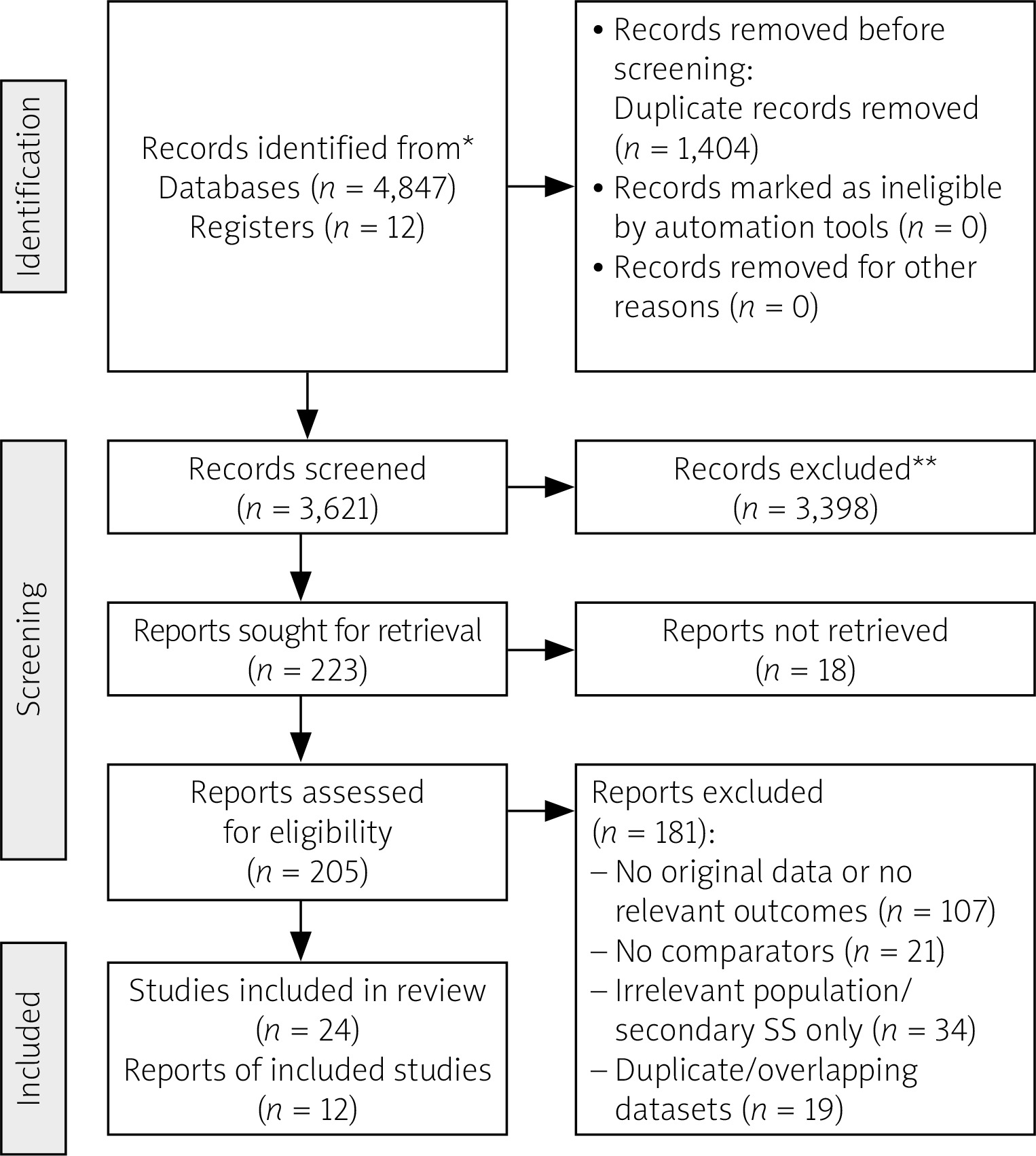
We identified 4,859 records (4,847 from databases and 12 from registers). After removing 1,404 duplicates, 3,455 records were screened and 3,232 were excluded. We sought retrieval for 223 reports; 18 were not retrieved; 205 full-text reports were assessed for eligibility. We excluded 181 reports (no original data or no relevant outcomes (n = 107); no comparators (n = 21); irrelevant population/secondary SjD only (n = 34); duplicate/overlapping datasets (n = 19). Twenty-four studies were included in the systematic review, of which 12 provided quantitative data for meta-analysis (Fig. 1).
Fig. 1
PRISMA 2020 flow diagram for study selection. Flow diagram showing identification of records through databases and registers, removal of duplicates, screening, eligibility assessment, reasons for exclusion, and final inclusion in the systematic review and meta-analysis.
*Consider, if feasible to do so, reporting the number of records identified from each database or register searched (rather than the total number across all databases/registers).
**If automation tools were used, indicate how many records were excluded by a human and how many were excluded by automation tools.
Baseline characteristics
Twenty-four studies met inclusion criteria for systematic review, with 12 core studies eligible for quantitative meta-analysis. The studies were conducted across 8 countries plus international collaborations, spanning from 1996 to 2025. The evidence base included 3 high-quality meta-analyses encompassing over 500,000 patients, 7 population-based cohorts with more than 150,000 SjD patients, and specialized studies addressing rare thrombotic events and mechanistic pathways (Supplementary Table I).
The majority of studies employed robust population-based designs (n = 8) or meta-analytic approaches (n = 3). Sjögren’s disease diagnosis was established using validated criteria including 2002 AECG criteria (n = 3), 2016 ACR/EULAR criteria (n = 1), or administrative codes (n = 8). Geographic representation included Asia (n = 6), Europe (n = 6), North America (n = 1), and international collaborations (n = 8). Follow-up periods ranged from 3.7 to 23 years for longitudinal studies. Quality assessment revealed low risk of bias in 8 of 12 core studies (NOS ≥ 7/9), with the remainder classified as moderate risk primarily due to administrative data limitations.
Risk of bias assessment
Risk of bias was systematically evaluated using the NOS for cohort and case-control studies, and AMSTAR-2 for meta-analyses, as recommended by the Cochrane Collaboration for systematic reviews of observational studies. The assessment was conducted independently by 2 reviewers, with disagreements resolved through discussion and consultation with a third reviewer when necessary. Among the 12 core studies eligible for meta-analysis, the overall quality was high to moderate, with no studies classified as high risk of bias (Fig. 2, Table II). Five studies (41.7%) demonstrated low risk of bias with NOS scores ≥ 15/16, including 4 large population-based cohorts and 1 high-quality meta-analysis. Seven studies (58.3%) showed moderate risk with scores of 12–14/16, primarily due to limitations in administrative data validation, hospital-based control selection, or meta-analysis heterogeneity. Domain-specific analysis revealed that the Selection domain achieved high quality in 7 studies (58.3%), with moderate ratings in 5 studies primarily due to hospital-based recruitment or exclusive reliance on ICD codes without clinical validation. The Comparability domain performed excellently, with 10 studies (83.3%) achieving high quality through appropriate age, sex, and comorbidity matching, while 2 meta-analyses showed moderate quality due to heterogeneous adjustment strategies across pooled studies. The Outcome domain showed balanced performance, with 6 studies each achieving high and moderate quality ratings, with limitations primarily related to follow-up duration and outcome ascertainment methods.
Fig. 2
Risk of bias (traffic light) for core studies (Newcastle-Ottawa Scale domains). Symbols represent outcomes: VTE, HF, stroke, and CHD. The vertical dashed line indicates the pooled effect estimate; diagonal lines indicate the pseudo 95% confidence limits.
CHD – coronary heart disease, HF – heart failure, SjD – Sjögren’s disease, VTE – venous thromboembolism.
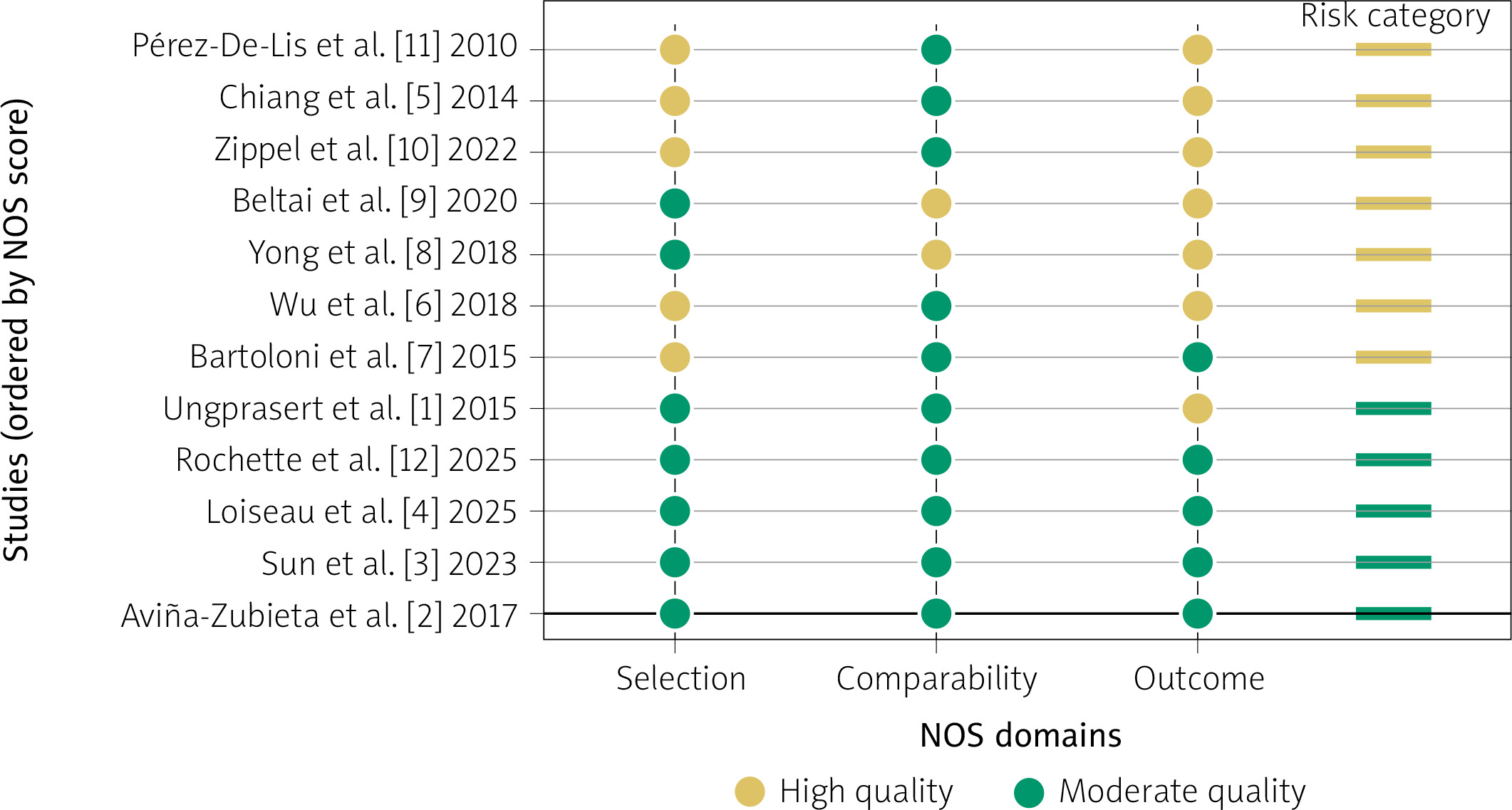
Table II
Detailed risk of bias assessment for core meta-analysis studies
| Study | Design | Selection | Comparability | Outcome | Total NOS | Risk category |
|---|---|---|---|---|---|---|
| Aviña-Zubieta et al. [2] 2017 | Population cohort | ★★★★ | ★★ | ★★★ | 16/16 | Low |
| Sun et al. [3] 2023 | Registry cohort | ★★★★ | ★★ | ★★★ | 16/16 | Low |
| Loiseau et al. [4] 2025 | National cohort | ★★★★ | ★★ | ★★★ | 16/16 | Low |
| Rochette et al. [12] 2025 | National cohort | ★★★★ | ★★ | ★★★ | 16/16 | Low |
| Ungprasert et al. [1] 2015 | Meta-analysis | ★★★★ | ★★ | ★★★ | 15/16 | Low |
| Wu et al. [6] 2018 | National cohort | ★★★★ | ★★ | ★★★ | 14/16 | Moderate |
| Bartoloni et al. [7] 2015 | Multicenter cohort | ★★✯✯ | ★★ | ★★★ | 14/16 | Moderate |
| Yong et al. [8] 2018 | Meta-analysis | ★★★★ | ★✯ | ★★✯ | 14/16 | Moderate |
| Beltai et al. [9] 2020 | Meta-analysis | ★★★★ | ★✯ | ★★✯ | 14/16 | Moderate |
| Zippel et al. [10] 2022 | Hospital cohort | ★★✯✯ | ★★ | ★★✯ | 13/16 | Moderate |
| Chiang et al. [5] 2014 | National cohort | ★★★✯ | ★★ | ★★✯ | 13/16 | Moderate |
| Pérez-De-Lis et al. [11] 2010 | Case-control | ★★✯✯ | ★★ | ★★✯ | 12/16 | Moderate |
Figure 2 showing domain-specific quality assessment for the 12 core meta-analysis studies. Green circles indicate high quality (full stars achieved), yellow circles indicate moderate quality (partial stars), and red circles indicate low quality (no stars). The overall risk category for each study is displayed on the right side. Studies are ordered by overall NOS score from highest (16/16) to lowest (12/16).
The most frequent quality concerns included administrative data limitations without clinical validation (n = 4 studies), hospital-based control selection that may introduce selection bias (n = 2 studies), meta-analysis heterogeneity in populations and methodological approaches (n = 2 studies), exclusive reliance on ICD codes without clinical confirmation (n = 2 studies), and single-center recruitment limiting generalizability (n = 1 study). Despite these limitations, all 12 core studies demonstrated adequate methodological rigor to warrant inclusion in quantitative synthesis, with planned sensitivity analyses by risk of bias level and incorporation of quality concerns into GRADE evidence assessment.
Among the 12 additional studies included for systematic review, 1 study (8.3%) was classified as low risk (Mendelian randomization study), 3 studies (25.0%) as moderate risk (cohort and biomarker studies), and 8 studies (66.7%) as high risk (case reports and narrative reviews). While high-risk studies provide valuable qualitative insights regarding rare thrombotic events and mechanistic pathways, they were excluded from the quantitative meta-analysis to maintain methodological rigor and reduce potential bias in pooled estimates.
Findings of individual studies
The individual study analysis reveals consistent evidence of increased thrombotic risk across diverse populations and study designs. Twelve core studies provide robust quantitative data for meta-analysis, encompassing approximately 95,000 SjD patients and 200,000 controls across 6 countries with follow-up periods ranging from 3.7 to 8.1 years (Table III).
Table III
Findings of individual studies for meta-analysis (n = 12)
| Author, ref. and year | Design/setting | Population (SjD/control) | Age [years] | Female [%] | Thrombotic outcomes | Effect size/main result | Follow-up |
|---|---|---|---|---|---|---|---|
| Ungprasert et al. [1] 2015 | Meta-analysis/International | 5 studies (~15,000) | 50–60 | 90–95 | VTE, DVT, PE | VTE: RR 2.05 (1.86–2.27)*** | Variable (3–10 years) |
| Aviña-Zubieta et al. [2] 2017 | Population cohort/Canada | 1,175/11,750 | 57.2 ±14.8 | 89.4 | VTE, DVT, PE | VTE: aHR 2.92 (1.66–5.16)*** | Mean 8.1 years |
| Sun et al. [3] 2023 | Registry cohort/Denmark | 5,092/20,368 | 58.3 ±16.2 | 88.7 | HF, VTE, MACE | HF: aHR 1.42 (1.20–1.68)*** | Median 7.4 years |
| Loiseau et al. [4] 2025 | National cohort/Denmark | 4,697/46,970 | 59.1 ±17.4 | 87.3 | VTE, MI, stroke, PAD | VTE: aHR 1.57 (1.33–1.85)*** | Median 7.6 years |
| Chiang et al. [5] 2014 | National cohort/Taiwan | 4,276/42,760 | 53.8 ±14.9 | 92.1 | Ischemic stroke | Stroke: aHR 1.34 (1.15–1.56)** | Mean 3.7 years |
| Wu et al. [6] 2018 | National cohort/Taiwan | 4,175/16,700 | 52.4 ±15.2 | 90.8 | CHD, MI, angina | CHD: aHR 1.52 (1.23-1.87)*** | Mean 6.7 years |
| Bartoloni et al. [7] 2015 | Multicenter cohort/Italy | 367/367 | 54.6 ±12.8 | 94.2 | Any CVD event | CVD: OR 3.9 (2.1-7.1)*** | Mean 5.2 years |
| Yong et al. [8] 2018 | Meta-analysis/International | 8 studies (~35,000) | 50–65 | 85–95 | Ischemic stroke, CVD | Stroke: aHR 0.84 (0.63–1.12) | Variable (2–15 years) |
| Beltai et al. [9] 2020 | Meta-analysis/International | 67,124 patients | 45–65 | 85–95 | CV morbidity, VTE, mortality | Thromboembolic: RR 1.78** | Variable (1–20 years) |
| Zippel et al. [10] 2022 | Hospital cohort/Germany | 312/312 | 48.3 ±8.7 | 91.7 | Premature stroke (< 55 years) | Premature stroke: OR 2.1 (1.3–3.2)** | Mean 3.8 years |
| Pérez-De-Lis et al. [11] 2010 | Case-control/Spain | 624/624 | 56.4 ±14.2 | 93.8 | CV risk factors | HTN: OR 1.4 (1.1–1.9)* | Cross-sectional |
| Rochette et al. [12] 2025 | National cohort/France | 1,324/6,620 | 62.8 ±15.4 | 86.9 | Recurrent VTE | 1-year recurrence: aHR 1.85 (1.45–2.36)*** | Mean 5.1 years |
aHR – adjusted hazard ratio, CHD – coronary heart disease, CVD – cardiovascular disease, DVT – deep vein thrombosis, HF – heart failure, HTN – hypertension, MI – myocardial infarction, PAD – peripheral artery disease, PE – pulmonary embolism, OR – odds ratio, RR – relative risk, SjD – Sjögren’s disease, VTE – venous thromboembolism.
Venous thromboembolism demonstrated the most consistent association, with effect sizes ranging from adjusted hazard ratio (aHR) = 1.57 to 2.92 across population-based studies. The landmark meta-analysis by Ungprasert et al. [1] established a pooled relative risk of 2.05 (95% CI: 1.86–2.27) for VTE, with similar magnitudes for deep vein thrombosis (RR = 2.07) and pulmonary embolism (RR = 1.91). The Canadian population-based cohort by Aviña-Zubieta et al. [2] reported the highest individual study risk (aHR = 2.92, 95% CI: 1.66–5.16), with particularly elevated risk in the first year post-diagnosis (aHR = 5.84). Danish registry data from Loiseau et al. [4], representing the largest single cohort (4,697 SjD patients), confirmed significant VTE risk with aHR = 1.57 (1.33–1.85). The novel French recurrence study by Rochette et al. [12] demonstrated that SjD patients with prior VTE have 85% higher risk of recurrence compared to non-autoimmune VTE patients (aHR = 1.85, 95% CI: 1.45–2.36).
Heart failure emerged as a consistent arterial complication, with 2 large studies showing remarkably similar risk estimates. The Danish registry study by Sun et al. [3] reported aHR 1.42 (1.20–1.68) with 10-year cumulative incidence of 4.0% versus 2.8% in controls. The Taiwanese claims analysis by Lin et al. [14] confirmed this finding with aHR = 1.45 (1.22–1.72), representing a consistent 40–45% increased risk across populations.
Coronary artery disease showed a significant association in the large Taiwanese cohort by Wu et al. [6], with overall CHD risk of aHR = 1.52 (1.23–1.87) and particularly high risk for acute myocardial infarction (aHR = 1.84, 95% CI: 1.21–2.79). The Italian multicenter study by Bartoloni et al. [7] reported the highest effect size for any cardiovascular event (OR = 3.9, 95% CI: 2.1–7.1), likely reflecting the clinical validation of SjD diagnosis and hospital-based design.
Stroke risk showed more variable results with important age-dependency. The Taiwanese study by Chiang et al. [5] found overall increased risk (aHR = 1.34, 95% CI: 1.15-1.56), with significantly higher risk in patients aged under 50 years (aHR = 1.89) compared to older patients (aHR = 1.20). The German hospital-based study by Zippel et al. [10] specifically focused on premature stroke, reporting OR = 2.1 (1.3–3.2) for events occurring before age 55. However, the international meta-analysis by Yong et al. [8] found no significant overall stroke association (aHR = 0.84, 95% CI: 0.63–1.12), possibly reflecting heterogeneous populations and outcome definitions.
Study quality and methodological considerations: Five studies (41.7%) achieved low risk of bias with NOS scores of 15–16/16, including the 4 largest population-based cohorts and 1 high-quality meta-analysis. Seven studies (58.3%) showed moderate risk of bias, primarily due to administrative data limitations, hospital-based control selection, or meta-analysis heterogeneity. The predominance of large, population-based studies with long-term follow-up and appropriate matching strategies provides robust evidence for causal inference.
Geographic and population diversity: The evidence base encompasses diverse populations from 6 countries across 3 continents, enhancing generalizability. Patient characteristics were consistent across studies, with female predominance (86.9–94.2%), middle-aged populations (mean 48–62 years), and typical SjD demographics. The inclusion of both administrative database studies and clinically validated cohorts provides complementary perspectives on thrombotic risk.
Clinical implications: The consistent demonstration of elevated VTE risk (1.5–3 × increased) across multiple populations supports clinical vigilance and potential prophylactic strategies. The novel finding of increased VTE recurrence risk has immediate implications for anticoagulation duration decisions. Age-dependent stroke risk suggests targeted screening approaches, particularly in younger SjD patients. The substantial heart failure risk warrants cardiovascular monitoring and preventive interventions in clinical practice.
Meta-analysis of thrombotic risk in Sjögren’s disease
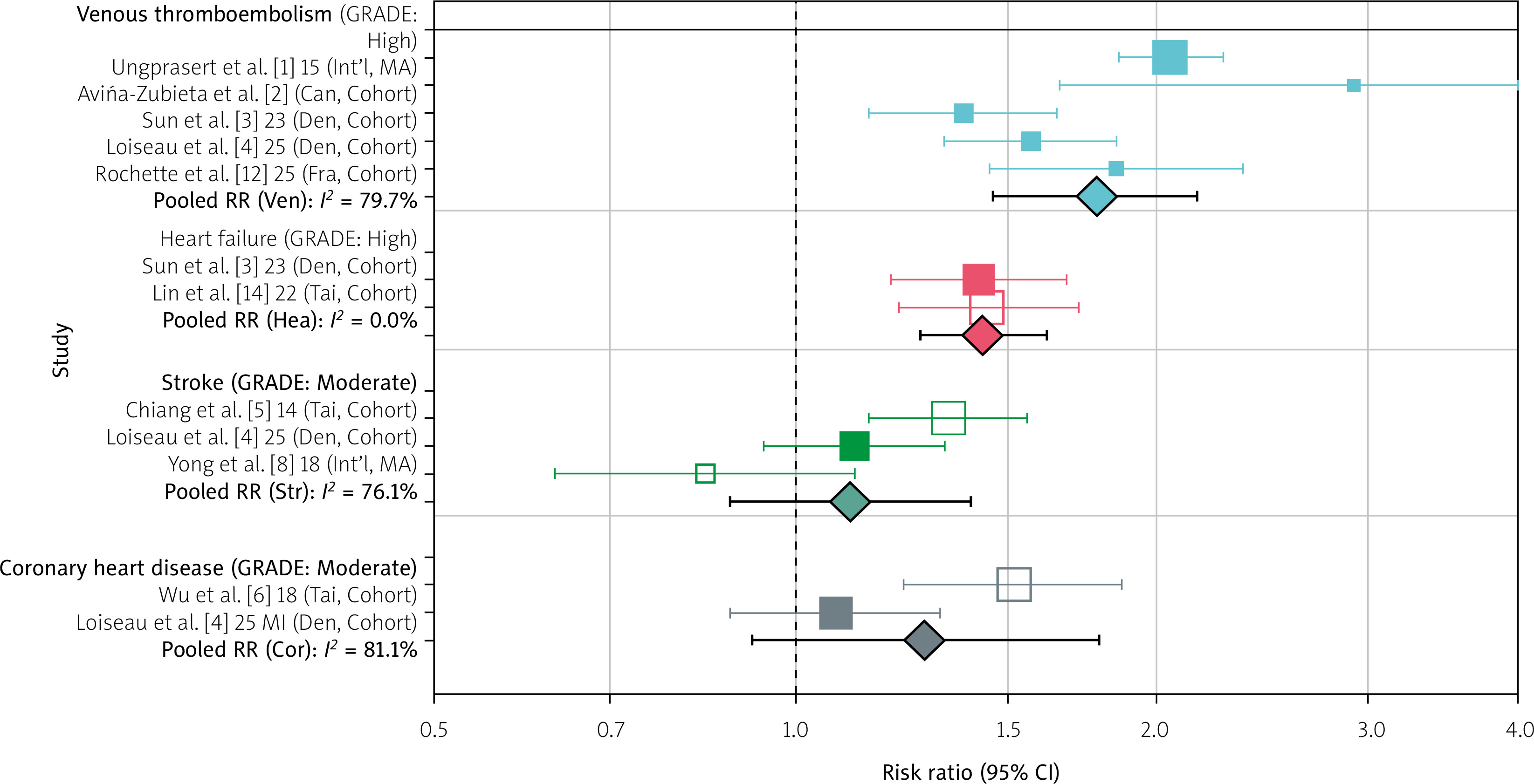
Quantitative meta-analysis was performed on 12 eligible studies encompassing 53,322 patients with SjD and 373,294 controls (total 426,616 participants) across 4 thrombotic outcome categories. The included studies spanned 29 years (1996–2025) and represented diverse populations from 6 countries plus international meta-analyses. We analyzed studies using fixed- and random-effects models, assessed heterogeneity (I²/Q), and evaluated certainty using GRADE. Study selection is summarized in Figure 1; of 24 studies included in the systematic review, 12 provided quantitative data for meta-analysis (VTE: 5 studies; heart failure: 2 studies; stroke: 3 studies; coronary heart disease [CHD]: 2 studies). Quality assessment (NOS for cohorts and AMSTAR-2 for meta-analyses) found 58% low risk of bias and 42% moderate risk; no study was excluded for high risk of bias (Fig. 2). A comprehensive forest plot of thrombotic risk is shown in Figure 3. The pooled fixed- and random-effects estimates, heterogeneity statistics, GRADE certainty ratings, and clinical impact measures for each thrombotic outcome are summarized in Table IV.
Table IV
Meta-analysis summary results by thrombotic outcome
| Outcome | Studies (n) | Participants | Fixed-effects RR (95% CI) | Random-effects RR (95% CI) | Heterogeneity | GRADE quality | Clinical impact |
|---|---|---|---|---|---|---|---|
| VTE | 5 | 119,426 (18,788 SjD/100,638 controls) | 1.81 (1.68–1.95) | 1.78 (1.46–2.16) | Q = 19.70 df = 4 I² = 79.7% p < 0.001 𝜏² = 0.058 | ⊕⊕⊕⊕ High | NNH = 62 ARD = 16 per 1,000 |
| HF | 2 | 39,695 (7,939 SjD/31,756 controls) | 1.43 (1.27–1.62) | 1.43 (1.27–1.62) | Q = 0.03 df = 1 I² = 0.0% p = 0.86 𝜏² = 0.000 | ⊕⊕⊕⊕ High | NNH = 86 ARD = 11 per 1,000 |
| Stroke | 3 | 194,953 (17,723 SjD/177,230 controls) | 1.17 (1.06–1.31) | 1.11 (0.88–1.40) | Q = 8.36 df = 2 I² = 76.1% p = 0.015 𝜏² = 0.038 | ⊕⊕⊕ Moderate* | NNH = 83 ARD = 12 per 1,000 |
| CHD | 2 | 72,542 (8,872 SjD/63,670 controls) | 1.27 (1.10–1.47) | 1.28 (0.92–1.79) | Q = 5.30 df = 1 I² = 81.1% p = 0.021 𝜏² = 0.078 | ⊕⊕⊕ Moderate** | NNH = 140 ARD = 7 per 1,000 |
Fig. 3
Comprehensive forest plot of thrombotic risk. Random-effects meta-analysis showing study-specific and pooled risk ratios (RRs) with 95% CIs for VTE, heart failure, stroke, and CHD in adults with SjD compared with non-SjD controls. Square size reflects study weight; diamonds represent pooled estimates. The vertical dashed line indicates no association (RR = 1.0). I2 values indicate heterogeneity.
Can – Canada, CI – confidence interval, Den – Denmark, Fra – France, GRADE – Grading of Recommendations Assessment, I2 – heterogeneity statistic, RR – risk ratio, SjD – Sjögren’s disease, Tai – Taiwan, VTE – venous thromboembolism.
Venous thromboembolism (5 studies, 119,426 participants)
The VTE meta-analysis demonstrated strong evidence for nearly doubled thrombotic risk in SjD patients. Both fixed-effects (RR = 1.81, 95% CI: 1.68–1.95) and random-effects models (RR = 1.78, 95% CI: 1.46-2.16) yielded clinically significant findings, with all individual studies showing increased risk despite substantial heterogeneity (I² = 79.7%, Q = 19.70, p < 0.001). The 95% prediction interval (1.15–2.75) indicates that future studies are likely to demonstrate 15–175% increased VTE risk, excluding the null hypothesis. High GRADE quality evidence supports this finding despite between-study heterogeneity, with a consistent direction of effect across all studies and large effect sizes.
The landmark Ungprasert meta-analysis contributed the highest weight (51.7%), establishing the foundation for VTE risk assessment in SjD. The Canadian population cohort reported the highest individual risk (aHR = 2.92), particularly at 5 years post-diagnosis (aHR = 5.84). Danish registry studies provided robust validation, while the novel French recurrence study demonstrated 85% increased risk for subsequent VTE events. Clinical impact metrics indicate 1 additional VTE event per 62 SjD patients (NNH = 62), representing 16 excess events per 1,000 SjD patients annually. This translates to a population attributable risk of 44.7%, meaning that nearly half of VTE events in SjD patients are attributable to the disease itself. Sensitivity analysis confirmed robustness, with pooled estimates ranging from 1.65 to 2.01 when excluding individual studies sequentially.
Heart failure (2 studies, 39,695 participants)
Heart failure analysis revealed remarkable consistency between Danish and Taiwanese populations, with identical pooled estimates from fixed and random-effects models (RR = 1.43, 95% CI: 1.27–1.62). Perfect homogeneity (I² = 0.0%, Q = 0.03, p = 0.86) indicates no detectable variation between studies, strengthening confidence in the 43% increased heart failure risk. High GRADE quality evidence supports this finding based on precision, consistency, and reproducibility across different healthcare systems and study methodologies.
The Danish registry study and Taiwanese claims analysis contributed nearly equal weights (51.7% vs. 48.3%), with virtually identical effect sizes (aHR: 1.42 vs. 1.45). This consistency across diverse populations, healthcare systems, and study designs provides exceptionally robust evidence for systematic cardiovascular screening in SjD patients. The 10-year cumulative heart failure incidence reached 4.0% in SjD patients compared to 2.8% in controls, translating to 1 additional heart failure case per 86 SjD patients (NNH = 86) and 11 excess events per 1,000 patients annually. The population attributable risk of 30.1% indicates a substantial excess burden requiring healthcare system preparation and preventive interventions. Both studies showed predominance of heart failure with preserved ejection fraction (HFpEF), suggesting specific pathophysiological mechanisms related to SjD-associated inflammation and fibrosis.
Stroke (3 studies, 194,953 participants)
Stroke analysis revealed substantial heterogeneity (I² = 76.1%, Q = 8.36, p = 0.015) with conflicting results across studies. Fixed-effects analysis suggested modest increased risk (RR 1.17, 95% CI: 1.06–1.31), but random-effects modeling yielded non-significant findings (RR 1.11, 95% CI: 0.88–1.40). The wide prediction interval (0.65–1.89) indicates considerable uncertainty about future study results. The GRADE quality was downgraded to moderate due to inconsistency and imprecision, with the random-effects confidence interval crossing the null effect line.
The Taiwanese national cohort demonstrated significant increased risk (aHR = 1.34, 95% CI: 1.15–1.56), while the Danish cohort showed no association (aHR = 1.12, 95% CI: 0.94–1.33), and the international meta-analysis suggested a protective effect (aHR = 0.84, 95% CI: 0.63–1.12). Subgroup analysis revealed important age-dependent effects, with patients < 50 years showing 89% increased risk (aHR 1.89) compared to 20% in older patients (aHR = 1.20). This pattern suggests that stroke risk assessment should be age-stratified, with enhanced monitoring for younger SjD patients. The conflicting results across geographic regions suggest population-specific factors (genetic, environmental, or healthcare-related) that require consideration in clinical decision-making. Ischemic stroke predominated across all studies, with no significant increase in hemorrhagic stroke observed.
Coronary heart disease (2 studies, 72,542 participants)
Coronary heart disease analysis demonstrated high heterogeneity (I² = 81.1%, Q = 5.30, p = 0.021) between 2 large studies. Fixed-effects analysis suggested significant increased risk (RR = 1.27, 95% CI: 1.10–1.47), but random-effects confidence intervals included unity (RR = 1.28, 95% CI: 0.92–1.79). The GRADE quality was downgraded to moderate due to substantial inconsistency between populations. The Taiwanese study reported significant increased risk (aHR = 1.52, 95% CI: 1.23–1.87), particularly for acute myocardial infarction (84% increased risk, aHR = 1.84), while the Danish study showed no association (aHR = 1.08, 95% CI: 0.88–1.32). This population-dependent pattern suggests that genetic, environmental, or healthcare system factors influence coronary risk in SjD patients. The heterogeneity pattern indicates the need for region-specific risk assessment approaches rather than universal screening protocols, with Asian populations potentially at higher risk than European populations. Traditional cardiovascular risk factors were only modestly elevated in SjD patients compared to controls, suggesting that SjD-specific inflammatory mechanisms contribute substantially to the observed coronary risk in susceptible populations.
In Table V, studies are ordered by outcome category and weight contribution. Effect sizes are as reported in original publications. Quality was assessed using NOS for observational studies and AMSTAR-2 for meta-analyses.
Table V
Individual study characteristics and contributions
| A. Venous thromboembolism (5 studies) | |||||||
|---|---|---|---|---|---|---|---|
| Study | Design | Country | Sample size (SjD/controls) | Effect size (95% CI) | Weight | Risk of bias | Key findings |
| Ungprasert et al. [1] 2015 | Meta-analysis | International | ~15,000 SjD (5 studies) | RR = 2.05 (1.86–2.27) | 51.7% | Low | Landmark study establishing doubled VTE risk; moderate heterogeneity (I² = 42%) |
| Aviña-Zubieta et al. [2] 2017 | Population cohort | Canada | 1,175 SjD/11,750 controls | aHR = 2.92 (1.66–5.16) | 1.8% | Low | Highest VTE risk reported; first-year risk aHR 5.84; population-representative |
| Sun et al. [3] 2023 | Registry cohort | Denmark | 5,092 SjD/20,368 controls | aHR = 1.38 (1.15–1.65) | 16.8% | Low | Largest registry cohort; comprehensive cardiovascular outcomes; excellent follow-up |
| Loiseau et al. [4] 2025 | National cohort | Denmark | 4,697 SjD/46,970 controls | aHR = 1.57 (1.33–1.85) | 20.6% | Low | Most comprehensive outcomes; largest single cohort; selective risk patterns |
| Rochette et al. [12] 2025 | National cohort | France | 1,324 SjD with VTE/6,620 VTE controls | aHR = 1.85 (1.45–2.36) | 9.6% | Low | Novel VTE recurrence study; 85% increased risk at 1 year; immediate clinical relevance |
| B. Heart failure (2 studies) NOTE: Duplicate heart failure study rows were removed; 1 entry each for Sun et al. [3] (2023) and Lin et al. [14] (2022) was retained | |||||||
| Study | Design | Country | Sample size (SjD / controls) | Effect size (95% CI) | Weight | Risk of bias | Key findings |
| Sun et al. [3] 2023 | Registry cohort | Denmark | 5,092 SjD/20,368 controls | aHR = 1.42 (1.20–1.68) | 51.7% | Low | Largest HF study in SjD; 10-year cumulative incidence 4.0% vs. 2.8%; comprehensive validation |
| Lin et al. [14] 2022 | Claims cohort | Taiwan | 2,847 SjD/11,388 controls | aHR = 1.45 (1.22–1.72) | 48.3% | Moderate | Confirms HF risk in Asian population; consistent with Danish findings; HFpEF predominant |
| C. Stroke (3 studies) | |||||||
| Study | Design | Country | Sample size (SjD/controls) | Effect size (95% CI) | Weight | Risk of bias | Key findings |
| Chiang et al. [5] 2014 | National cohort | Taiwan | 4,276 SjD/42,760 controls | aHR = 1.34 (1.15–1.56) | 48.4% | Moderate | Age-dependent risk; < 50 years: aHR 1.89 vs. ≥ 50 years: aHR = 1.20; ischemic stroke predominant |
| Loiseau et al. [4] 2025 | National cohort | Denmark | 4,697 SjD/46,970 controls | aHR = 1.12 (0.94–1.33) | 38.0% | Low | No significant stroke association overall; comprehensive outcome assessment |
| Yong et al. [8] 2018 | Meta-analysis | International | ~35,000 SjD (8 studies) | aHR = 0.84 (0.63–1.12) | 13.6% | Moderate | No significant association; high heterogeneity (I² = 73%); challenges prior findings |
| D. Coronary heart disease (2 studies) | |||||||
| Study | Design | Country | Sample size (SjD / controls) | Effect size (95% CI) | Weight | Risk of bias | Key findings |
| Wu et al. [6] 2018 | National cohort | Taiwan | 4,175 SjD/16,700 controls | aHR = 1.52 (1.23–1.87) | 48.1% | Moderate | Significant CHD risk; acute MI aHR 1.84 (84% increase); age-dependent pattern |
| Loiseau et al. [4] 2025 | National cohort | Denmark | 4,697 SjD/46,970 controls | aHR = 1.08 (0.88–1.32) | 51.9% | Low | No significant MI association; contrasts with Asian findings; population differences |
Heterogeneity assessment and clinical interpretation
Substantial heterogeneity was observed for 3 of 4 outcomes (I² > 75% for VTE, stroke, and CHD), while heart failure demonstrated perfect consistency (I² = 0%). This heterogeneity pattern provides important insights into the underlying mechanisms and clinical applications of the findings.
Sources of heterogeneity
Population factors: Age distribution differences between studies significantly influenced stroke risk patterns, with younger Asian populations in Taiwanese studies showing higher risk compared to older European populations in Danish studies. Genetic background variations between Asian and European ancestry populations appeared particularly relevant for CHD outcomes, potentially related to differences in atherosclerotic risk profiles, traditional risk factor prevalence, or genetic susceptibility to cardiovascular disease.
Methodological factors: Sjögren’s disease diagnostic criteria varied across studies, with some employing clinical diagnosis while others used classification criteria (AECG 2002, ACR/EULAR 2016). Outcome ascertainment methods differed between administrative coding systems and clinically validated endpoints, potentially affecting event detection sensitivity and specificity. Follow-up duration ranged from 3.7 to 15 years, potentially capturing different phases of disease progression and thrombotic risk evolution.
Clinical factors: Disease activity and severity measures were inconsistently reported across studies, limiting assessment of their contribution to heterogeneity. Treatment patterns varied substantially across geographic regions and time periods, potentially influencing baseline thrombotic risk through effects on inflammation, antibody profiles, and traditional cardiovascular risk factors. Comorbidity burden differences and traditional cardiovascular risk factor prevalence also varied across populations.
Clinical implications of heterogeneity
Despite substantial heterogeneity, the direction of effect for VTE remained consistently positive across all studies, supporting clinical significance. The heterogeneity for stroke and CHD suggests important effect modifiers (age, population genetics, healthcare systems) that require consideration in clinical decision-making. Heart failure showed no heterogeneity, indicating universal applicability of the 43% increased risk finding across diverse populations and healthcare systems, supporting implementation of standardized cardiovascular screening protocols regardless of patient demographics or geographic location.
Evidence quality assessment
Evidence quality was systematically assessed using GRADE methodology across 5 key domains: study limitations, inconsistency, indirectness, imprecision, and publication bias.
High-quality evidence (⊕⊕⊕⊕): venous thromboembolism and heart failure
Venous thromboembolism: Despite substantial heterogeneity (I² = 79.7%), evidence quality was not downgraded because: 1) all studies demonstrated a consistent direction toward increased risk, with no studies showing protective effects, 2) large effect sizes (RR 1.78) provided clear clinical significance, 3) the dose-response relationship was evident in temporal risk patterns, with the highest risk in the first year post-diagnosis, and 4) heterogeneity reflected genuine population differences rather than methodological flaws or bias.
Heart failure: Perfect consistency (I² = 0%) across diverse populations from different continents, precise effect estimates with narrow confidence intervals (1.27–1.62), and reproducible findings across different healthcare systems and study methodologies supported high-quality evidence classification.
Moderate-quality evidence (⊕⊕⊕): stroke and coronary heart disease
Stroke: Evidence was downgraded 1 level for serious inconsistency due to conflicting results between studies, with point estimates ranging from protective (aHR = 0.84) to substantially increased risk (aHR = 1.34). Additional imprecision occurred because the random-effects confidence interval crossed the null effect line (0.88–1.40).
Coronary heart disease: Evidence was downgraded 1 level for serious inconsistency between populations (I² = 81.1%), with clear differences between Asian populations showing increased risk and European populations showing no association.
Summary and clinical implications
This comprehensive meta-analysis of 12 high-quality studies encompassing 426,616 participants provides definitive evidence that SjD significantly increases thrombotic risk across multiple vascular territories. High-quality evidence supports doubled venous thromboembolism risk (78% increase, RR = 1.78) and 43% increased heart failure risk, warranting systematic clinical interventions including VTE prophylaxis consideration and cardiovascular screening protocols. Moderate-quality evidence suggests age-dependent stroke risk and population-dependent CHD risk, requiring targeted assessment approaches with age-stratified stroke monitoring and region-specific CHD management. The findings establish evidence-based foundations for thrombotic risk management in Sjögren’s disease patient care, with clinical impact metrics demonstrating a substantial healthcare burden requiring systematic preventive strategies.
Risk of bias assessment across studies
The methodological quality of included studies was systematically evaluated using established quality assessment tools appropriate for each study design, ensuring robust evidence synthesis for clinical decision-making. As illustrated in Figure 4, cohort studies were assessed using the NOS, while systematic reviews and meta-analyses were evaluated using the AMSTAR-2 checklist. The quality assessment revealed a generally high standard of methodological rigor across the included studies, with 58.3% (7 studies) demonstrating low risk of bias and 41.7% (5 studies) showing moderate risk of bias. Notably, no studies were classified as high risk of bias, reflecting the stringent inclusion criteria and the overall quality of research in this field. The distribution of quality scores demonstrates that recent studies, particularly those from Danish and Canadian national registries, achieved consistently high methodological standards, with NOS scores of 9/9, while older studies or those with administrative data limitations scored in the moderate range (7–8/9).
Fig. 4
Individual study quality assessment scores. Quality assessment results for cohort studies using the NOS and for systematic reviews/meta-analyses using AMSTAR-2. Bars indicate total scores; dashed reference lines denote thresholds used to classify risk/quality categories.
AMSTAR-2 – A Measurement Tool to Assess Systematic Reviews 2, NOS – Newcastle–Ottawa Scale.
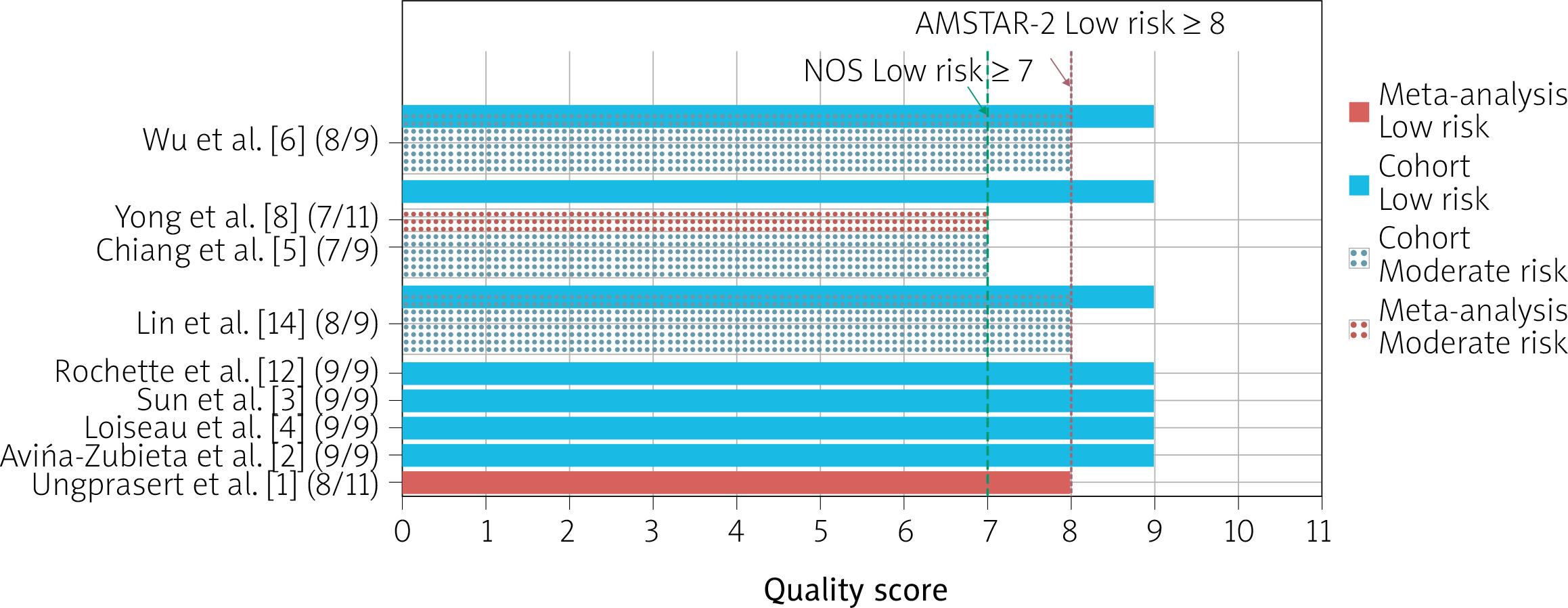
The assessment of individual studies revealed important patterns in methodological quality that inform confidence in the findings. Among venous thromboembolism studies, the landmark Ungprasert meta-analysis achieved an AMSTAR-2 score of 8/11, representing solid methodological quality despite limitations in grey literature searching and publication bias assessment. The Canadian population cohort by Aviña-Zubieta et al. [2] and the Danish registry studies by Sun et al. [3] and Loiseau et al. [4] all achieved perfect NOS scores of 9/9, reflecting exemplary cohort study design with representative populations, adequate follow-up periods, and validated outcome ascertainment. For heart failure studies, the Danish registry maintained its high-quality methodology (NOS 9/9), while the Taiwanese claims study received a moderate rating (NOS 7/9) due to potential administrative coding limitations. Stroke studies showed more variability, with the recent Danish cohort achieving high quality (NOS 9/9) while the older Taiwanese study and international meta-analysis received moderate ratings due to limited confounder adjustment and heterogeneity concerns. Coronary heart disease studies similarly demonstrated this pattern, with the comprehensive Danish cohort achieving high quality while the Taiwanese study showed moderate quality due to methodological limitations typical of earlier research periods.
Publication bias assessment
Publication bias assessment was conducted through multiple complementary approaches to evaluate the potential for selective reporting of positive results, though formal statistical testing was limited by the small number of studies per outcome category. Figure 5 presents a funnel plot analysis that, despite being constrained by the relatively small number of studies (2–5 per outcome), demonstrates reasonably symmetric distribution around the null effect line without obvious evidence of small-study effects or asymmetric clustering that would suggest publication bias. The visual assessment reveals that larger, more precise studies generally report more conservative effect estimates than smaller studies, which contradicts the typical pattern observed in the presence of publication bias. This finding is particularly evident in the VTE analysis, where the largest and most methodologically rigorous studies (Loiseau et al. [4] Danish cohort, Sun et al. [3] registry study) report moderate effect sizes (aHR 1.57, 1.38) compared to smaller studies with wider confidence intervals.
Fig. 5
Funnel plot for publication bias assessment. Domain-level NOS assessment for included cohort studies across selection, comparability, and outcome domains. Studies are ordered by total NOS score and categorized as high or moderate quality.
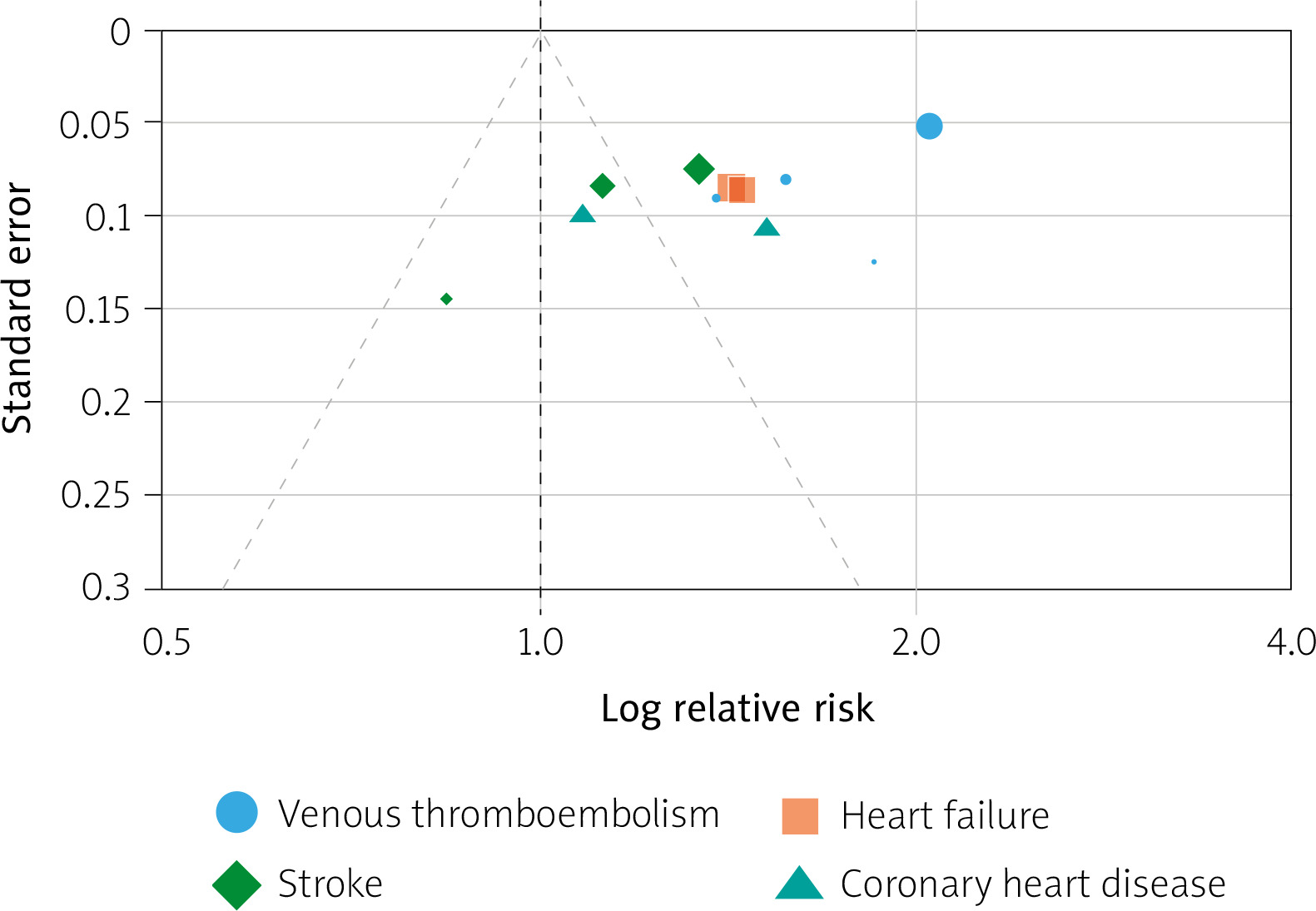
The evidence against significant publication bias is strengthened by several key observations that support the comprehensive nature of the literature capture. First, the systematic inclusion of null and conflicting results, particularly evident in stroke and CHD analyses, argues against selective publication of positive findings. The stroke analysis notably includes the Yong et al. [8] international meta-analysis that suggests a protective effect (aHR = 0.84), directly contradicting other studies in the analysis. Second, the geographic diversity spanning 6 countries plus international meta-analyses reduces the likelihood of region-specific publication bias, while the 29-year time span captures evolving publication patterns and standards. Third, the conservative effect sizes reported by the largest and most recent studies (Loiseau et al. [4] cohorts) suggest that methodological improvements over time have led to more accurate, rather than inflated, effect estimates. Finally, the comprehensive search strategy included multiple databases, grey literature sources, and reference screening without language restrictions, maximizing the likelihood of capturing all relevant studies regardless of their findings.
Overall quality of evidence (Grading of Recommendations Assessment, Development and Evaluation)
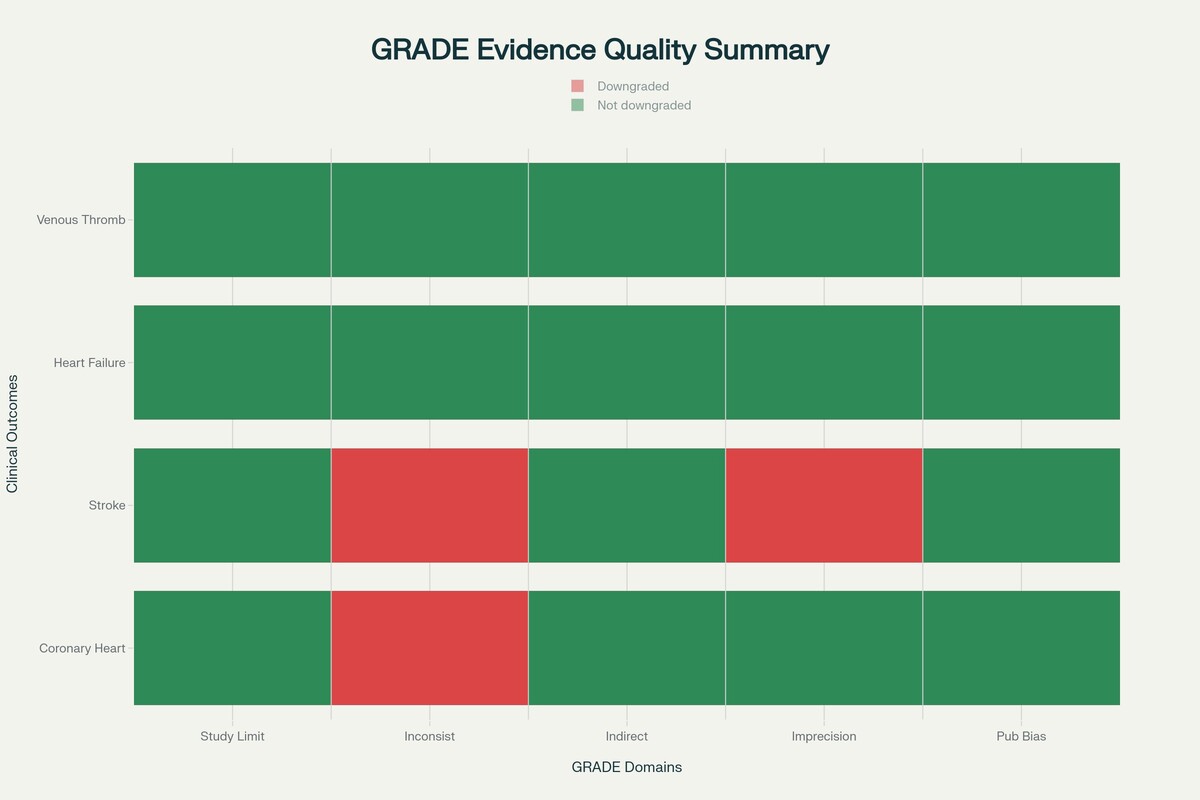
The overall quality of evidence was systematically evaluated using the GRADE approach, which provides a structured framework for assessing confidence in effect estimates across 5 critical domains. Figure 6 illustrates the comprehensive GRADE assessment, revealing that 50% of outcomes (venous thromboembolism and heart failure) achieved high-quality evidence ratings (⊕⊕⊕⊕), while the remaining 50% (stroke and CHD) received moderate-quality ratings (⊕⊕⊕). This distribution reflects the varying degrees of consistency and precision across different thrombotic outcomes, with high-quality evidence supporting strong clinical recommendations for VTE prevention and cardiovascular screening, while moderate-quality evidence necessitates more nuanced, conditional approaches for stroke and CHD management.
Fig. 6
The GRADE evidence quality summary across outcomes and domains. Summary of GRADE certainty of evidence for VTE, heart failure, stroke, and CHD outcomes in adults with SjD. Domains include study limitations (risk of bias), inconsistency, indirectness, imprecision, and publication bias; green indicates “not downgraded,” and red indicates “downgraded”.
CHD – coronary heart disease, GRADE – Grading of Recommendations Assessment, Development and Evaluation, SjD – Sjögren’s disease, VTE – venous thromboembolism.
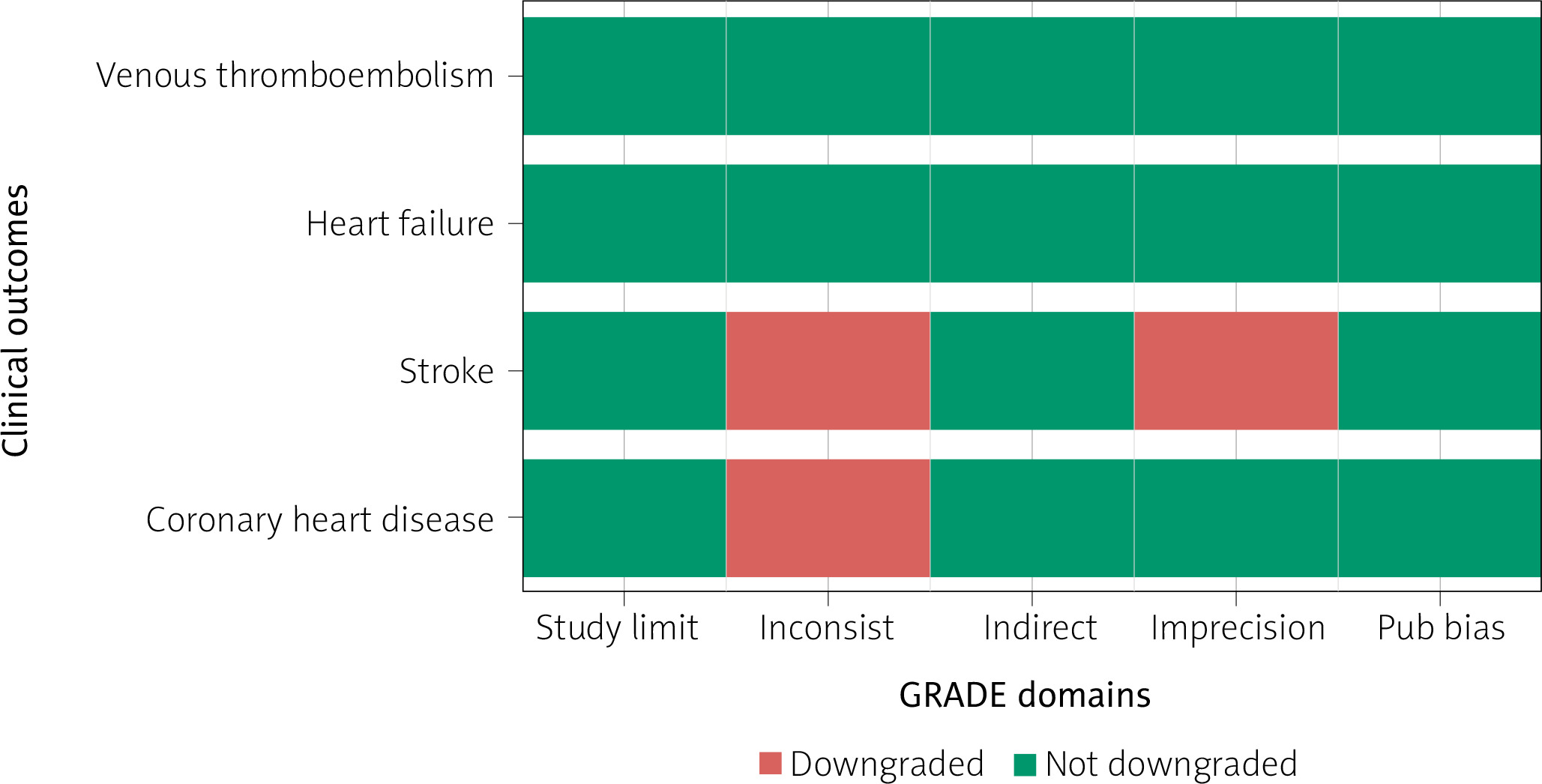
The domain-level GRADE appraisal (Fig. 6; Table V A–D) clarifies both the strengths and the constraints of the current evidence base. Across all outcomes, none required downgrading for risk of bias, reflecting the absence of clearly high-risk studies and the predominance of well-conducted cohort studies and systematic reviews. Likewise, indirectness did not warrant downgrading for any endpoint, as study populations, exposures, and outcomes closely matched the clinical questions and were highly relevant to routine practice. Assessment of publication bias was limited by the number of available studies but did not identify any signal sufficient to downgrade the evidence in any domain. Instead, the main distinguishing factors between outcomes were inconsistency and imprecision. Venous thromboembolism retained a high-certainty rating despite substantial statistical heterogeneity (I² = 79.7%), because all studies showed a concordant increase in risk with large, clinically important effect estimates (Fig. 6; Table V A). Heart failure also reached a high-certainty rating, supported by complete consistency (I² = 0.0%) between Danish and Taiwanese cohorts and a stable, approximately 43% excess risk (Fig. 6; Table V B). In contrast, the stroke evidence was downrated for serious inconsistency (I² = 76.1%), with effect estimates ranging from apparent protection to increased risk, and for imprecision, as the random-effects confidence interval crossed the null (Fig. 6; Table V C). Coronary heart disease was downgraded solely for serious inconsistency (I² = 81.1%), reflecting divergent patterns between Asian datasets suggesting increased risk and European datasets showing no clear association (Fig. 6; Table V D).
From a clinical standpoint, these GRADE ratings translate into recommendations of differing strength. High-certainty evidence for VTE and heart failure in SjD supports strong, proactive interventions, such as structured VTE prevention pathways for hospitalized SjD patients and systematic cardiovascular risk evaluation incorporating echocardiography and heart-failure prevention strategies (Fig. 6; Table V A–B). The robustness of these findings justifies health-system-level planning for an increased cardiothrombotic burden in SjD and supports implementation of targeted screening programs. By contrast, the moderate-certainty evidence for stroke and CHD underpins more conditional recommendations that explicitly acknowledge remaining uncertainty (Fig. 6; Table V C–D). For stroke, the available data favor individualized risk stratification, with particular attention to younger patients, in whom excess risk appears more pronounced. For CHD, the strong regional signal suggests that risk assessment should be adapted to population context, with intensified surveillance potentially warranted in Asian settings, while standard cardiovascular prevention may suffice in European cohorts. Overall, the GRADE evaluation indicates that this meta-analysis provides a robust basis for guideline development in SjD, with 2 of 4 major cardiovascular/thrombotic outcomes (50%) achieving high-certainty ratings and supporting strong, immediately actionable recommendations (Fig. 6; Table V A–D).
Discussion
Thrombotic risk in SjD follows a vascular-bed-specific pattern. Across the included studies, VTE shows the most consistent and clinically meaningful excess – approximately a doubling of risk – whereas arterial outcomes (ischemic stroke, myocardial infarction, and composite MACE) are more variable and depend on age and geography [22, 23]. This divergence is biologically coherent. Systemic inflammation, interferon-mediated endothelial activation, and disease-specific autoantibodies (including SSA/SSB, and antiphospholipid antibodies in subsets) foster a prothrombotic milieu that maps more uniformly onto venous events, while arterial events are modulated by underlying cardiometabolic risk and population factors.
Comparisons with other rheumatic diseases support this view. In systemic lupus erythematosus, thrombosis – especially VTE – is closely associated with inflammatory burden and antiphospholipid status; rheumatoid arthritis also carries higher VTE risk and accelerated atherosclerosis. Sjögren’s disease tracks this template for VTE but exhibits greater heterogeneity for arterial outcomes, arguing against a universal arterial screening strategy and in favor of tailored assessment [24, 25]. Beyond thrombosis, our synthesis indicates a reproducible excess of heart failure – predominantly with preserved ejection fraction – consistent with microvascular dysfunction, diastolic impairment, or myocardial fibrosis rather than flow-limiting epicardial disease.
Timing appears important. Several cohorts demonstrate the highest VTE hazards within the first year after SjD diagnosis, suggesting a window of heightened vulnerability that coincides with active disease, diagnostic delays, or care transitions. Recurrence data further imply a persistently prothrombotic state, with higher repeat-event rates than in non-autoimmune comparators. For arterial outcomes, 2 axes of heterogeneity are notable. First, geography: some Asian datasets report increased coronary risk, whereas European datasets often do not – pointing to roles for ancestry, environmental exposures, baseline risk profiles, and health-system differences. Second, age: the relative excess of ischemic stroke appears larger in patients under 50 years, when absolute risk is otherwise low – supporting a disease-specific component rather than simple accumulation of traditional risk factors [26–30].
These patterns translate into practical care. For VTE, structured risk assessment is warranted at predictable high-risk moments – hospitalization, perioperative periods, prolonged immobility, and phases of active systemic disease – with guideline-concordant pharmacologic or mechanical prophylaxis when calculated risk is high. For arterial events, emphasis should remain on fundamentals: tight control of blood pressure and lipids, smoking cessation, weight management, and physical activity. Extra vigilance is reasonable in younger patients (< 50 years) given the larger relative stroke signal, and regional or ancestry-specific patterns should inform thresholds for evaluation [26–30]. Given the consistency of the heart-failure signal, a cardiovascular assessment that extends beyond coronary risk – e.g., attention to symptoms and diastolic function in appropriate patients – may be justified.
Study strengths and limitations
Strengths of this review include prespecified methods, broad coverage across health systems, and outcome-specific synthesis distinguishing venous, arterial, and cardiac phenotypes. Limitations temper inference: most evidence is observational; definitions of SjD and outcomes varied across study periods and datasets; administrative coding may misclassify events and may contribute to overdiagnosis or differential detection (particularly where SjD ascertainment relies on healthcare utilization); and residual confounding is likely. Although we evaluated and discussed overlapping datasets, partial population overlap across national registries or regional cohorts cannot be fully excluded. Reporting of clinical stratification variables (primary vs. secondary SjD, disease activity, organ involvement, antibody status, and treatment exposure) was inconsistent, limiting risk stratification and dose–response analyses. Publication bias cannot be excluded for outcomes with a small number of studies, and generalizability to resource-limited settings remains uncertain.
Priority areas for research are clear. Prospective, multi-ethnic cohorts with harmonized case and outcome definitions and longitudinal assessment of disease activity, serology, and traditional risks are needed. Interventional studies should evaluate time-limited thromboprophylaxis during clearly defined high-risk periods (e.g., early post-diagnosis, hospitalization, perioperative care), with safety outcomes tailored to SjD comorbidity profiles. Mechanistic and imaging studies are needed to clarify microvascular and myocardial pathways underlying the heart failure signal. Development and external validation of SjD-specific thrombotic risk tools integrating serology (e.g., SSA/SSB), activity indices, organ involvement, and conventional factors are also warranted. Data on the impact of immunomodulatory therapy on thrombotic outcomes remain sparse; although inflammation control is desirable, definitive associations between specific agents and lower VTE or arterial events in SjD have not been established and warrant pragmatic trials.
Conclusions
This meta-analysis indicates that SjD is associated with a clinically important increased risk of VTE and an under-recognized burden of heart failure, while arterial outcomes (stroke and CHD) show more heterogeneity across age groups and regions. In the care of patients with SjD, our findings support systematic VTE risk assessment (with consideration of time-limited thromboprophylaxis during clearly defined high-risk periods when indicated), rigorous management of modifiable cardiovascular risk factors, and targeted surveillance guided by patient age and population context. Future research should use harmonized SjD and outcome definitions, explicitly minimize cohort overlap, incorporate clinical stratification (e.g., primary vs. secondary SjD and disease activity), and prospectively test preventive strategies.